
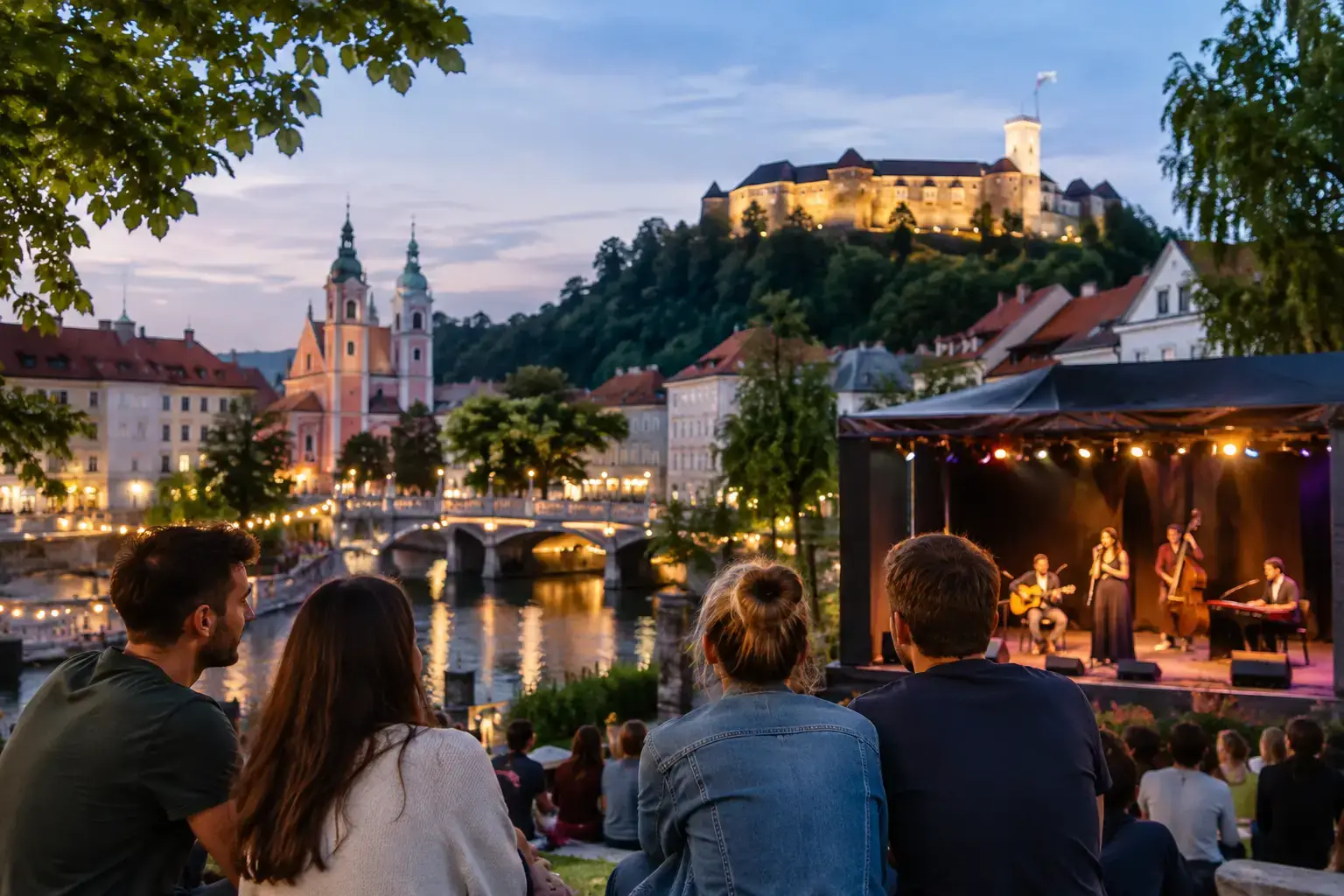
Ljubljana is easy to enjoy by day: stroll beside the river, admire the castle, stop for coffee, and wander through the market. The question many visitors face after sunset is how to plan a cultural night that feels truly Slovenian rather than like another ordinary dinner reservation. The best answer brings the table, the music, the stories, and the people together.
A memorable evening should give you more than a plate of local food or a seat at a performance. It should make you feel welcome in the celebration. In Slovenia, hospitality has always had room for a generous toast, a good meal, a lively song, and the kind of laughter that needs no translation.
What Makes a Cultural Night Worth Your Time?
A cultural evening is at its best when it is shared. You may learn a few facts in a museum or hear folk music from a distance, but traditions become much more memorable when you taste them, clap along to them, and join the dance yourself.
For international visitors, the practical benefit matters, too. Ljubljana has excellent restaurants and many interesting sights, but arranging a traditional meal, live folklore, regional context, and entertainment separately can take time. If you have only a few evenings in Slovenia, a planned experience lets you enjoy all of these elements in one organized occasion.
Look for a program that balances authenticity with warmth. Slovenian tradition is wonderfully diverse, shaped by Alpine villages, Mediterranean influence, the Karst region, the Pannonian plains, and Central European history. A good evening does not try to turn that richness into a lecture. It introduces it through flavors, costumes, music, dances, and stories that are easy to enjoy even if it is your first night in the country.
How to Plan a Cultural Night That Feels Local
Start by deciding what you want from the evening. Couples may be looking for a special dinner with atmosphere. Families often want an activity that keeps every generation involved. Friends may want music, dancing, and a social setting rather than a quiet meal. Tour groups and travel planners need a dependable schedule, clear inclusions, and an experience that works for guests with different interests.
The right choice depends on your group, but the strongest cultural nights usually include three things: traditional food and drink, live performance, and participation. When one of those elements is missing, the evening can still be pleasant, but it may feel more like a restaurant visit or a theater show than a celebration of place.
Choose Food That Tells a Regional Story
A traditional Slovenian dinner should be a part of the experience, not an afterthought. Slovenia may be small on the map, yet its food reflects many landscapes and local customs. Hearty dishes from the mountains, seasonal ingredients from farms and forests, and wines from Slovenia’s respected wine regions all belong at the table.
A three-course meal gives guests time to settle in and enjoy the rhythm of the evening. Wine adds to the welcome, especially when it is presented as part of the local table culture rather than an extra detail. A toast with homemade schnapps and dried fruit can be a cheerful opening ritual, setting a relaxed and festive tone before the music begins.
If you have dietary needs, ask ahead of time. A well-organized cultural dinner should be clear about what can be accommodated. Do not assume that “traditional” has to mean inflexible. Thoughtful hospitality makes room for guests while respecting the character of the meal.
Make Live Music and Dance Non-Negotiable
Recorded background music cannot replace the energy of performers in the room. Live folk music changes the mood immediately: the rhythm reaches the table, the costumes add color, and the room becomes part of the show.
Slovenian folk dancing is especially enjoyable because it is both skillful and spirited. Dancers from different regions may have distinct steps, styles, and dress, offering a glimpse of the country’s variety without requiring guests to know the details beforehand. The best performers make that variety feel welcoming, not intimidating.
Ask whether the program includes multiple regional dances and storytelling. A single performance can be entertaining, but a fuller program offers a more rounded introduction to the traditions behind the music. You should leave with a sense that Slovenia is not one flat postcard image, but a country with many local voices.
Pick Participation Over Passive Watching
The most talked-about moments often happen after the formal performance begins. Guests are invited to try a dance step, join a game, answer a playful question, or raise a glass with new friends at the next table. These moments make a cultural night feel personal.
Participation does not mean anyone has to become the center of attention. Good hosts give guests an invitation, not an obligation. You can dance enthusiastically, clap from your seat, or simply enjoy the cheerful atmosphere. For shy travelers, families with children, and mixed-age groups, that flexibility makes a real difference.
Games also help bring together people who may have arrived as strangers. A couple from the United States, a family traveling through Europe, and a coach group visiting for one night can all share the same laugh. That is exactly what a hospitable Slovenian evening should do.
Timing Your Ljubljana Evening
Plan your cultural night for an evening when you can arrive without rushing. Spend the afternoon exploring Ljubljana’s old town, visiting the castle, or enjoying the riverfront, then leave enough time to freshen up before dinner. You do not need formal attire, but smart casual clothing is a comfortable choice for a dinner show.
For a short city break, book early in your visit rather than saving it for your final night. A cultural evening gives you useful context for what you will see elsewhere in Slovenia. After hearing regional songs and tasting local dishes, a later trip to Lake Bled, the coast, wine country, or the mountains may feel even more connected.
If you are traveling during a busy season, reserving in advance is wise. Popular evening experiences have limited seating, and groups may need additional coordination. Travel agents and group leaders should confirm timing, meal requirements, final numbers, and any transportation details before the day of the event.
Why One Organized Evening Can Be the Better Choice
Independent travelers sometimes worry that a ticketed cultural dinner will feel too structured. That is a fair question. A quiet neighborhood restaurant may be the better option if your only goal is an intimate meal for two or if you prefer to explore local nightlife without a schedule.
But if your goal is to understand Slovenian hospitality in a single evening, structure is an advantage. You know what is included, when the entertainment begins, and how the evening will unfold. There is no need to compare restaurants, search for a folk performance, arrange separate transport, or hope that an event is accessible to visitors who do not speak Slovenian.
Traditional Slovenian Evening brings those pieces together in Ljubljana with a three-course traditional meal, wine, a schnapps welcome, live folk music, regional dances, stories, guest games, costumed performers, and a take-home gift. It is designed as a celebration, not a classroom, so guests can learn by joining in.
For larger groups, an organized format is even more valuable. It creates one shared highlight for an itinerary while allowing guests with very different travel styles to enjoy the same night. The food-focused traveler has a traditional meal, the culture lover sees folklore, and the social guest has music, games, and dancing.
A Few Details That Make the Difference
Before booking, check what is actually included in the ticket. A clear cultural-night experience should explain the meal, drinks, performance, duration, and whether guest participation is part of the program. This helps you compare value fairly and avoids surprises after you arrive.
Read the tone of the experience, not just the menu. Some cultural programs are formal and performance-led; others are lively and interactive. Neither approach is wrong, but they create very different evenings. If you want applause, dancing, stories, and a room full of energy, choose an event that promises exactly that.
Finally, arrive ready to be a guest, not just a spectator. Taste something unfamiliar, accept the toast if it suits you, ask about a costume or song, and give the dance a try. The perfect cultural night is rarely about getting every step right. It is about going home with a full heart, a few new stories, and a warmer connection to Slovenia.