
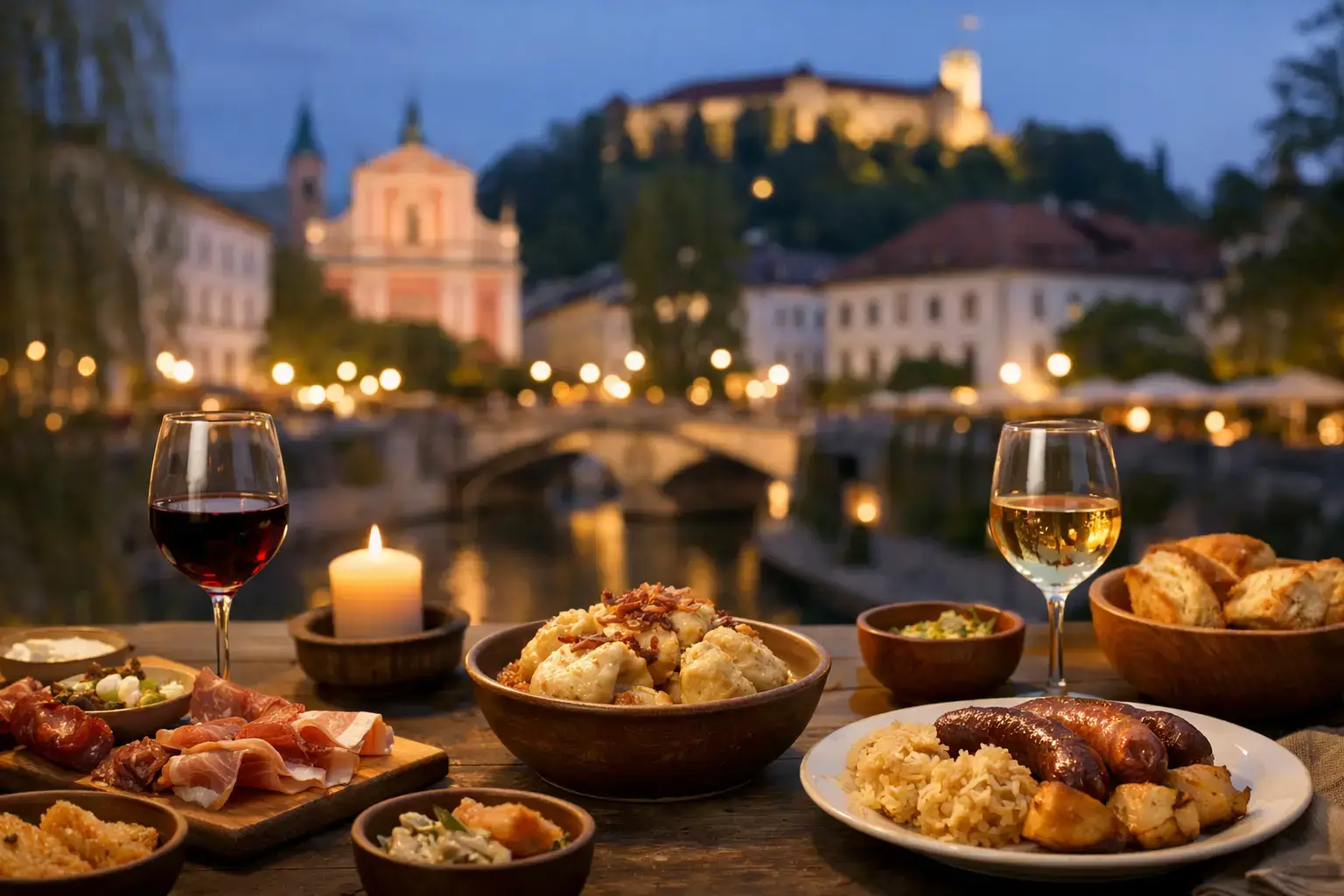
The first toast arrives before the first course, and before long, strangers at neighboring tables are clapping along to folk music. That is the pleasure of a Slovenian cultural dinner experience: it gives you much more than a meal. In one joyful evening in Ljubljana, you can taste local flavors, hear the stories behind regional traditions, watch dancers in costume, and become part of the celebration yourself.
For travelers with only a few nights in Slovenia, this is a lively shortcut to the country’s culture. There is no need to choose between a traditional dinner, a folklore performance, and a social night out. They happen together, around the same table.
What Makes a Slovenian Cultural Dinner Experience Special?
Slovenia may be a small country, but its traditions are richly varied. Alpine villages, Mediterranean towns, Pannonian plains, and the Karst region have all shaped the food, music, clothing, customs, and dances that Slovenians proudly carry forward. A good cultural dinner show brings those regional influences into one welcoming evening without making guests feel as though they are sitting through a classroom lecture.
The format matters. A standard restaurant reservation can offer an excellent plate of local food, but it may not explain why the dish belongs to Slovenia or introduce the traditions around it. A theater performance can be beautiful, yet it often keeps the audience at a distance. A cultural dinner connects both sides of the experience: guests eat, listen, laugh, toast, and join in.
That active spirit is the difference. You are invited to enjoy Slovenia as a guest at a festive gathering, not as a silent observer behind a velvet rope.
A Welcome Worth Raising a Glass To
A traditional Slovenian evening often begins with a warm welcome ritual. Homemade schnapps served with dried fruit sets a convivial tone and introduces one of the region’s familiar ways of greeting guests. It is a small moment, but it says a great deal about Slovenian hospitality: make people comfortable, offer something from the table, and let the evening unfold at an easy, cheerful pace.
For international visitors, this kind of welcome removes the uncertainty that can come with trying an unfamiliar local tradition. You do not need to know the customs in advance. Hosts and performers guide the evening, explain what is happening, and make participation feel natural rather than intimidating.
Wine is part of the table as well. Slovenia has a long winemaking heritage, and sharing wine with dinner gives guests another useful introduction to the country’s regional character. The goal is not a formal tasting with technical notes. It is the simple pleasure of pairing a good meal with a toast, conversation, and music.
Traditional Food Is Part of the Story
Food is central to the experience because Slovenian cooking carries the marks of the country’s geography and history. Its dishes reflect influences from Central Europe, the Balkans, the Alps, Italy, and the Adriatic, while still retaining a distinctly Slovenian sense of home-style generosity.
A three-course traditional meal gives the evening a satisfying rhythm. Courses arrive as the program develops, so dinner never feels separate from the entertainment. Guests can settle in, enjoy a glass of wine, and let the stories and performances add context to what is on the plate.
It is worth approaching the meal with curiosity rather than comparing it to the most familiar version of a cuisine you know. Slovenian food is often hearty, seasonal, and comforting. Some guests come hoping for a fine-dining experience with elaborate presentation; this is different. The greater reward is a meal that feels connected to local homes, celebrations, and shared tables.
If you have dietary requirements, it is wise to ask about arrangements before reserving. Traditional menus can include ingredients that are meaningful to the dish, and advance communication helps make the evening more enjoyable for everyone.
Music and Dance From Across Slovenia
As plates are cleared and glasses are raised, the room comes alive with Slovenian folk music and dance. Costumed performers present the color, movement, and energy of traditions from different parts of the country. The result is not a single regional snapshot, but a broader celebration of Slovenian cultural life.
Folk dance has a special ability to cross language barriers. You may not understand every lyric or every story immediately, but the rhythm is clear. So are the smiles, the quick footwork, the circle formations, and the excitement of performers inviting the room to respond.
The costumes deserve attention, too. Traditional dress is more than decoration. Its materials, embroidery, silhouettes, and accessories can signal local identity, occasion, and heritage. Seeing costumes alongside music and dancing makes their meaning more tangible than seeing them displayed in a case.
You Are Not Expected to Stay Seated
This is the point where many guests discover that the evening is not only a show. Performers may invite you to try a few steps, join a group dance, or take part in a friendly game. No dance experience is needed, and nobody needs to be perfect. The best approach is to follow the lead, laugh at a missed step, and enjoy the company around you.
For couples, families, friend groups, and multigenerational travelers, participation creates the memory that lasts. A photo of a beautiful dinner is nice. A photo of your group dancing with new friends in Ljubljana is usually the one people share first.
That said, participation should feel like an invitation, not an obligation. Guests who prefer to watch can still enjoy the performance, food, music, and atmosphere. The energy of the room comes from shared enthusiasm, not pressure.
Why It Works So Well for Travelers in Ljubljana
Ljubljana is wonderfully walkable, full of cafés, riverside views, and excellent restaurants. But travelers often face a familiar question after a day of sightseeing: what should we do tonight that feels distinctly Slovenian? A cultural dinner answers that question with an organized evening that is easy to fit into a short stay.
It is especially useful for first-time visitors who want an introduction to Slovenian traditions without spending days researching regional customs. In a single event, guests encounter food, wine, music, dancing, stories, and local welcome rituals. It is an efficient choice, but it never needs to feel rushed.
Groups benefit in a different way. Planning a dinner that pleases travelers of different ages and interests can be difficult. One person wants local cuisine, another wants live entertainment, and someone else wants an activity rather than another long meal. A festive dinner show gives everyone something to enjoy while keeping the group together.
Travel agents and tour leaders also value a fixed, structured experience. A reliable program, clear inclusions, and a shared table make logistics easier for coach tours, celebration groups, and itineraries with limited free time.
What to Expect From the Evening
The atmosphere is celebratory from the beginning, but it is not chaotic. Hosts guide the program so guests know when to enjoy dinner, when to listen, and when it is time to clap, toast, or get up for a dance. The sequence creates a natural flow: welcome, food, storytelling, performance, games, and shared fun.
At Traditional Slovenian Evening, the experience is designed around those tangible moments: a three-course meal with wine, a schnapps welcome, dried fruit, live folk music, regional dances, stories, guest participation, costumed performers, and a gift to take home. Together, these details turn a night out into a warm introduction to the country.
The trade-off is simple. If you are looking for a quiet, private dinner where conversation is the only focus, a traditional restaurant may suit you better. If you want a social evening with movement, music, and a ready-made sense of occasion, a Slovenian cultural dinner is a far more memorable choice.
Make Room for a Shared Celebration
The best travel experiences are often the ones that make a place feel less distant. You arrive not knowing the words to the songs or the steps to the dances. By the end of the night, you may be raising a glass with people you met only hours earlier, carrying a small gift, and leaving with a better feeling for Slovenia than any menu or museum label could offer.
Come hungry, bring your sense of fun, and leave a little space in your evening for a Slovenian welcome.