
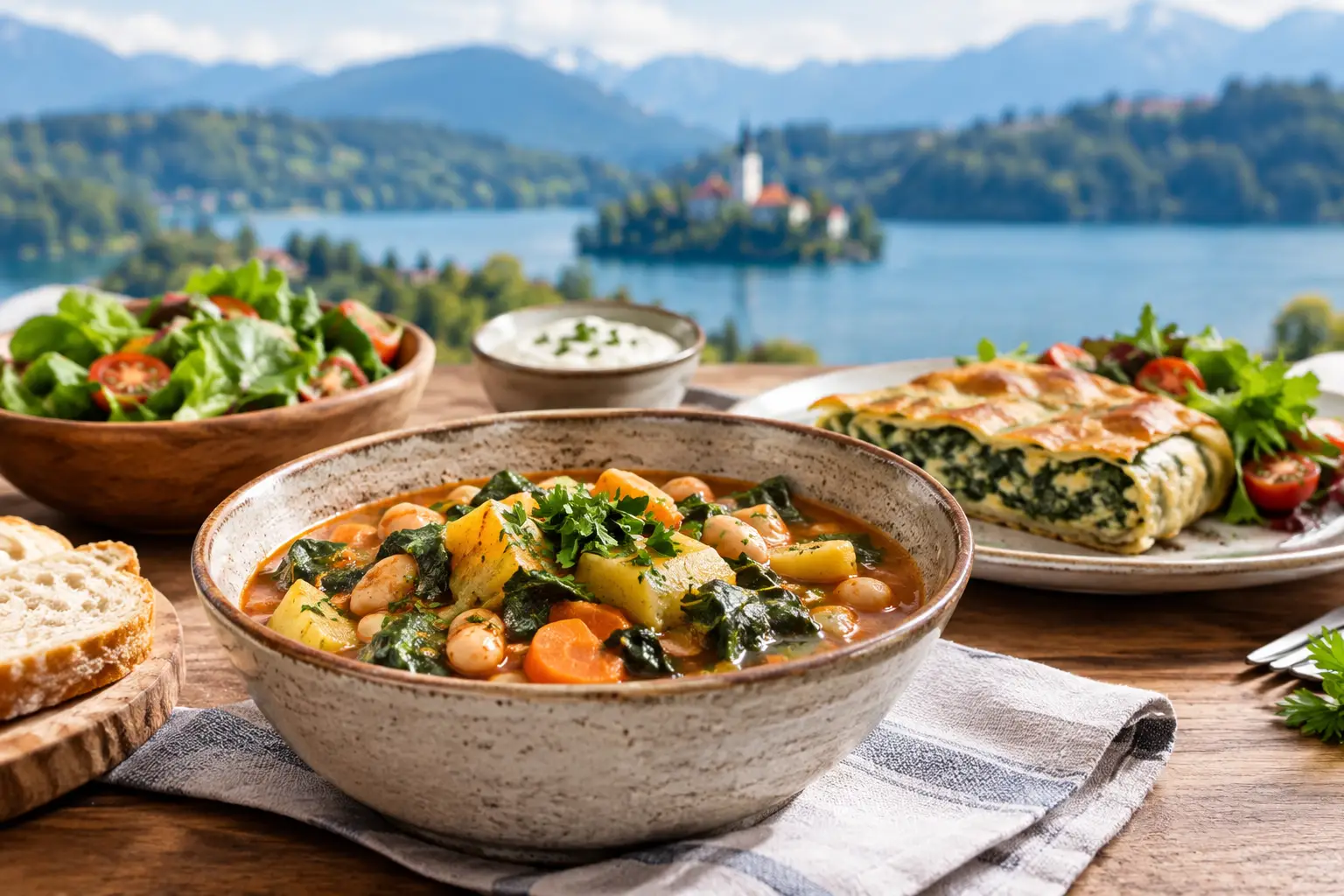
A plate of buckwheat dumplings, a bowl of mushroom soup, fresh farmhouse cheese, and a glass of local wine can make a wonderful vegetarian meal in Slovenia. But are Slovenian meals vegetarian by default? Usually, no. Traditional Slovenian cooking is deeply shaped by Alpine farms, forests, Adriatic influences, and hearty Central European comfort food, so meat, cured sausage, bacon, and broth appear often. The good news for vegetarian travelers is that Slovenia also has a generous pantry of vegetables, grains, cheeses, mushrooms, and seasonal produce.
The easiest way to enjoy Slovenian food is to arrive with the right expectation: you will find delicious vegetarian choices, but you may need to ask a question or two before ordering. A little planning turns dinner from a guessing game into a memorable part of your trip.
Are Slovenian meals vegetarian by tradition?
Most classic Slovenian meals are not strictly vegetarian. Pork has long held a central place at celebrations, while sausages, smoked meats, cracklings, and rich meat stocks bring flavor to many regional dishes. In mountain areas, dairy products are equally important, and along the coast, seafood appears more often.
That does not mean a vegetarian will be limited to side dishes. Slovenian home cooking has always relied on what gardens, fields, orchards, forests, and pastures provide. Beans, potatoes, cabbage, turnips, corn, buckwheat, barley, wild herbs, mushrooms, apples, and dairy all have a place at the table. Many recipes can be prepared without meat, while others need only a small adjustment.
Vegetarianism is also familiar in Ljubljana and other visitor-friendly towns. Restaurants increasingly label vegetarian and vegan dishes, and chefs are used to answering questions about ingredients. Smaller rural restaurants may have fewer menu choices, but they are often especially willing to prepare something simple and satisfying when asked in advance.
Traditional Slovenian dishes vegetarians can enjoy
Some of Slovenia’s most comforting flavors work beautifully for vegetarian guests. Mushroom soup is a favorite, particularly in autumn, when the country’s forests offer an impressive variety of mushrooms. Ask whether the soup is made with vegetable stock, as some kitchens use meat broth.
Buckwheat is another Slovenian staple worth seeking out. You may encounter buckwheat porridge, buckwheat bread, or ajdovi žganci, a rustic buckwheat spoonbread often served with milk, yogurt, mushrooms, or cheese. Traditionally, žganci can arrive with cracklings, so request it without them.
Štruklji are among the dishes visitors remember long after dinner. These rolled dumplings come in savory and sweet versions, with fillings that may include cottage cheese, tarragon, walnuts, apples, or other seasonal ingredients. Cheese štruklji are often vegetarian, though it is still wise to check the sauce and cooking fat.
Potato dishes are common and far more exciting than they may sound. Pražen krompir, Slovenian-style sautéed potatoes, is a beloved accompaniment, but the traditional version can include bacon or pork drippings. Vegetarian preparation is easy, and many restaurants will make it with oil or butter instead.
Bean and cabbage dishes can also be a good choice, especially in colder months. Jota, a hearty stew of beans, potatoes, and sauerkraut or turnip, is a regional favorite from the Primorska area. It is frequently made with smoked pork, but a meat-free version is full of character when prepared with good olive oil, herbs, and vegetables.
Fresh cheese, yogurt, salads, vegetable risottos, grilled seasonal vegetables, and handmade pasta round out the options. In summer, the Ljubljana market culture and restaurant terraces make it particularly easy to enjoy bright, produce-led meals.
Do not assume “vegetable” means vegetarian
This is the one detail worth remembering. A vegetable soup may start with meat stock. Potatoes may be flavored with bacon. Beans may be cooked alongside sausage. Slovenian cooks prize deeply developed flavor, and a small amount of cured meat is sometimes treated as seasoning rather than the main ingredient.
A friendly question avoids disappointment. You can ask in English, “Is this made with meat, meat stock, or bacon?” In Ljubljana, that will usually be understood immediately. If you would like a useful Slovenian phrase, try: “Ali je to brez mesa?” It means, “Is this without meat?”
For stricter vegetarians, it also helps to ask about gelatin, animal rennet in cheese, and shared frying oil. These are not issues in every restaurant, but clear communication is always part of a relaxed meal.
What about vegan and gluten-free guests?
Vegan dining takes a bit more planning because dairy and eggs are common in traditional Slovenian recipes. Yet it is entirely possible, especially in Ljubljana. Mushroom dishes, bean stews made without meat, salads, roasted vegetables, vegetable soups with plant-based stock, and buckwheat preparations can all fit a vegan diet when prepared thoughtfully.
Gluten-free travelers should take extra care with dumplings, bread, pastries, and sauces. Buckwheat sounds gluten-free, but a dish may be mixed with wheat flour or prepared in a kitchen where cross-contact is possible. Ask directly if you have celiac disease or a serious allergy.
The key difference is notice. A restaurant may be able to accommodate a vegetarian guest at the moment, while vegan, gluten-free, allergy-sensitive, or multiple dietary requirements are best shared when reserving. That gives the kitchen time to prepare a meal that feels like a real Slovenian dinner, not an afterthought.
Enjoying a traditional dinner experience as a vegetarian
A cultural dinner is about more than one recipe. It is the welcome, the stories, the music, the clinking glasses, the laughter around the table, and the feeling that you have been invited into a local celebration. Food should add to that joy, not make you worry through every course.
When booking a set-menu experience, always state that you are vegetarian before arrival and explain whether you eat dairy and eggs. Be specific if you do not eat fish, broth, gelatin, or animal rennet. “Vegetarian” is a helpful start, but the details allow the host to make the right arrangement.
At Traditional Slovenian Evening, guests can share dietary requirements in advance so the team can help make the three-course meal part of the celebration. That leaves you free to enjoy the homemade schnapps welcome, live folk music, regional dances, games, costumes, wine, and the cheerful invitation to join the fun.
A vegetarian traveler’s best approach in Slovenia
Choose places that describe their ingredients clearly, especially when you are arriving hungry after a day of sightseeing. In Ljubljana, ask your hotel, guide, or restaurant host for a recommendation if you want a fully vegetarian or vegan meal. Outside the capital, call ahead when possible, particularly on Sundays, in small villages, or when traveling with a group.
Be open to regional variations, too. The coast may offer Mediterranean vegetables, olive oil, and Italian-influenced pasta; the Alpine northwest leans toward dairy, potatoes, and buckwheat; eastern Slovenia is known for warming grain dishes, pumpkin seed oil, and orchard fruit. Slovenian food is not one fixed menu, and that variety is part of its charm.
Most of all, ask with warmth and curiosity. Slovenians are proud of their food, and a host who understands what you can eat will often be delighted to point you toward the dish they believe you should not miss. With a little advance notice, a vegetarian meal in Slovenia can still be hearty, local, festive, and made for raising a glass with new friends.