
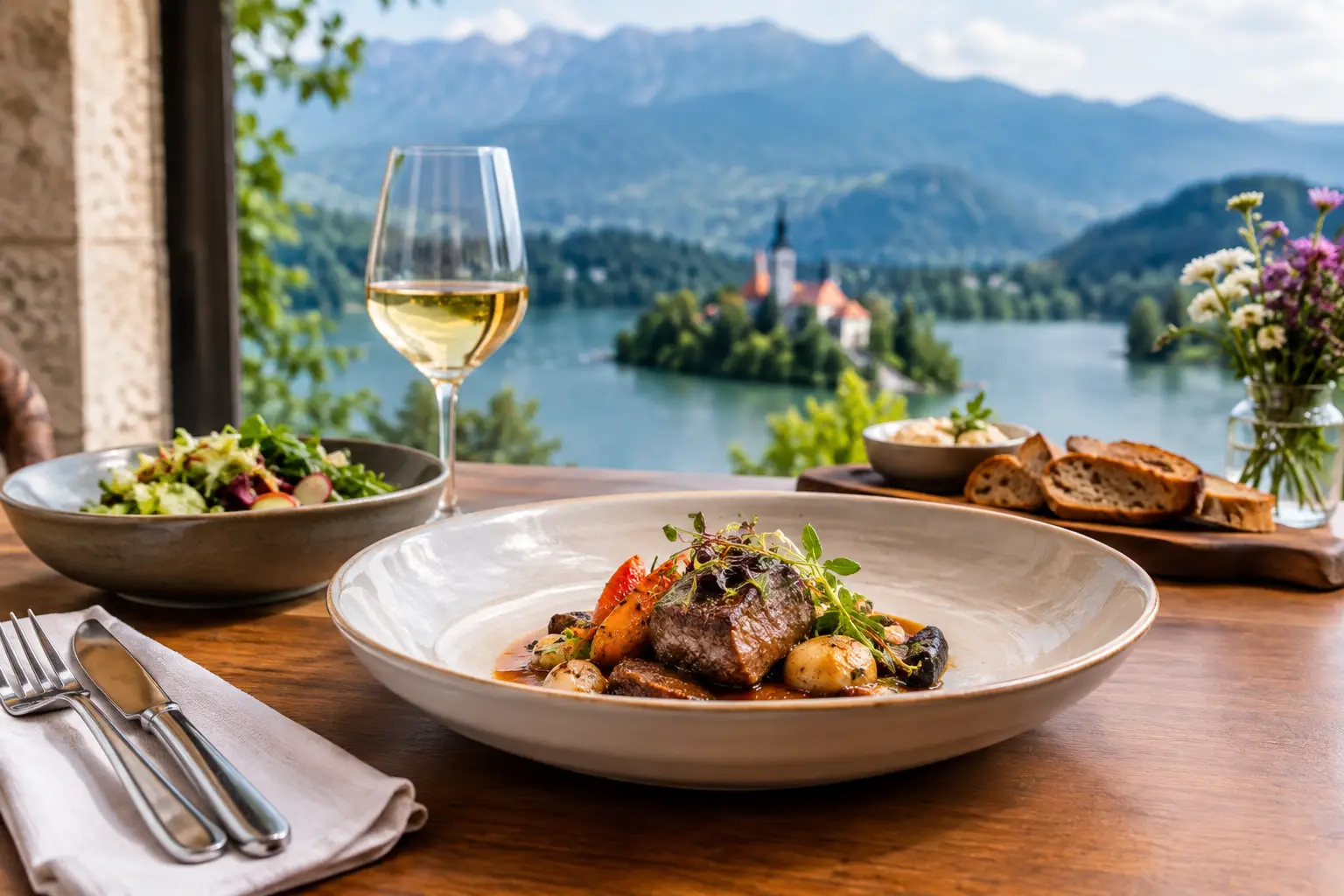
A Slovenian meal rarely begins with a rushed glance at a menu. It begins with a welcome: a glass raised, a story shared, and the feeling that dinner is about to become part of the evening’s memory. Slovenian dinner courses are especially enjoyable for travelers because they bring together Alpine comfort food, Adriatic influences, Pannonian flavors, and the generous hospitality of a country where every region has something delicious to claim as its own.
For visitors in Ljubljana, the pleasure is not only in tasting the food. It is in understanding how a simple course can carry a local tradition, a family recipe, or a reason for people to gather around one table. Here is what to expect from a traditional Slovenian dinner and how to enjoy every course with confidence.
Slovenian Dinner Courses: More Than a Menu
Slovenia is small enough to cross in a few hours, yet its food traditions change noticeably from one landscape to the next. The northwest brings mountain pastures, dairy dishes, and buckwheat. The coast contributes olive oil, seafood, and Mediterranean herbs. Eastern regions are known for pumpkin seed oil, pork dishes, and excellent wines. Central Slovenia, including Ljubljana, gathers these influences into a table that feels varied, hearty, and welcoming.
That means there is no single fixed dinner sequence served in every Slovenian home or restaurant. A relaxed family meal may have fewer formal stages, while a festive dinner can linger for hours. Still, travelers will often recognize a warm welcome, a starter or soup, a substantial main course, dessert, and carefully chosen wine. The best versions leave room for conversation between each course.
The welcome: schnapps, dried fruit, and a toast
Before the first plate appears, guests may be greeted with homemade schnapps, known locally as žganje. It can be made from fruit, herbs, honey, or other regional ingredients, and it is usually served in a small glass as a gesture of hospitality, not as a challenge to your stamina.
Dried fruit makes a natural companion, particularly in a festive setting. The combination is practical as well as traditional: fruit preserves the abundance of the harvest, while a warming spirit encourages guests to settle in and raise a toast together. If you do not drink alcohol, simply say so. Slovenian hospitality is about making you comfortable, and a good host will never make a toast feel compulsory.
The First Course: A Taste of Place
A starter sets the tone for Slovenian dinner courses. Depending on the region and season, it may be a platter of local cheeses, cured meats, bread, spreads, and pickled vegetables. It might also be a bowl of soup, which is far more than a cold-weather necessity in Slovenian cooking.
Mushroom soup reflects the country’s love of its forests, while vegetable soups make use of the garden’s changing seasons. Jota, a thick soup or stew with beans, potatoes, sauerkraut, or turnip, is associated with the Karst and coastal hinterland. It is filling enough to become a meal itself, so it may appear as a main course rather than a starter.
Bread deserves attention, too. You may encounter rustic loaves, buckwheat bread, or potica-style traditions around the table. Slovenia’s famous potica is a rolled pastry most often connected with celebrations and dessert, especially when filled with walnuts, but the country’s baking culture appears throughout the meal. Take a little bread with the first course, but save room. Slovenian hospitality tends to be generous.
A note on pumpkin seed oil
In the northeast, dark green pumpkin seed oil is a point of regional pride. Its nutty flavor can transform a simple salad, cheese plate, or vegetable dish. It looks striking in the bottle and tastes stronger than olive oil, so a small amount goes a long way. If it appears on your table, try it before adding extra salt or dressing. It is meant to be noticed.
The Main Course: Hearty, Regional, and Made to Share
The main course is where Slovenian food shows its comforting side. Meat dishes are common, particularly pork, sausage, poultry, and beef, but regional recipes make them much more interesting than a plain roast. Expect slow-cooked flavors, herbs, seasonal vegetables, and sides that turn a plate into a proper feast.
Sausage lovers should know kranjska klobasa, or Carniolan sausage, one of Slovenia’s best-known culinary specialties. It is traditionally served with mustard, horseradish, sauerkraut, or bread. In other settings, you may find roasted meats with potatoes, cabbage, or root vegetables, often prepared in a way that feels both rustic and celebratory.
Dumplings and buckwheat dishes also deserve a place on a traveler’s wish list. Štruklji are rolled dumplings that can be savory or sweet, with fillings ranging from cottage cheese and tarragon to walnuts and fruit. They can accompany a main dish, appear as a lighter course, or arrive at the end of the meal. Their flexibility is part of their charm.
For vegetarian guests, choices depend on the venue and the season. Traditional cuisine can be meat-forward, but Slovenia’s strong farming culture also offers excellent mushrooms, cheeses, beans, potatoes, buckwheat, vegetables, and seasonal salads. Tell your host about dietary needs when booking rather than waiting until dinner begins. A little advance notice makes it much easier to prepare a meal that still feels special.
Wine belongs at the table
Slovenia has three major wine-growing regions, and wine is often poured to complement the meal rather than dominate it. A fresh white can work beautifully with a starter, cheese, or lighter dish, while a fuller red suits roasted meat and richer sauces. The right choice depends on the food, your taste, and the region being represented.
There is no need to know Slovenian grape varieties before you arrive. Ask what is being poured and why it was selected. A host who explains a local wine gives you more than a drink – they give you another way to understand the landscape beyond Ljubljana.
Dessert: Sweetness Without the Rush
Dessert is a chance to slow the evening down rather than signal that everyone should leave. Potica is the star many visitors hope to try. This festive rolled pastry is traditionally made with walnut filling, though variations can include tarragon, poppy seed, hazelnut, or other ingredients. Sliced potica is often served during holidays and family celebrations, but it is welcome any time guests have gathered.
Other sweet possibilities include strudel, fruit desserts, honey-based treats, and sweet štruklji. The flavors are often familiar enough to be comforting but distinct in their use of local dairy, orchard fruit, nuts, and pastry traditions. Coffee or another small pour of schnapps may follow, especially when the table is still full of conversation.
Why a Cultural Dinner Makes the Courses Better
A good Slovenian dinner is never only about what arrives on the plate. Folk songs, regional dances, costumes, stories, and friendly games give the food its context. A sausage tastes better when you hear where it comes from. A toast becomes more meaningful when you make it with new friends at the table. Even guests who arrive knowing little about Slovenia often leave with a favorite dish, a new dance step, and a story to share at home.
Traditional Slovenian Evening brings this spirit together in Ljubljana with a three-course meal, wine, homemade schnapps and dried fruit, live folk music, dances from across Slovenia, participatory games, and a small gift to take away. It is a lively option for couples, families, friend groups, and organized tours who want dinner to feel like an event, not simply a reservation.
If you are choosing where to eat, consider what kind of evening you want. A quiet restaurant offers time to focus on a specific dish or wine list. A cultural dinner show offers a broader introduction to Slovenian traditions in one cheerful, organized night. Neither is better for every traveler, but for a first evening in Ljubljana, the second option can make the country feel welcoming very quickly.
Come hungry, ask questions, accept the toast if you wish, and leave a little room for dessert. The finest Slovenian dinner courses do not ask you to be an expert – they simply invite you to join the celebration.