
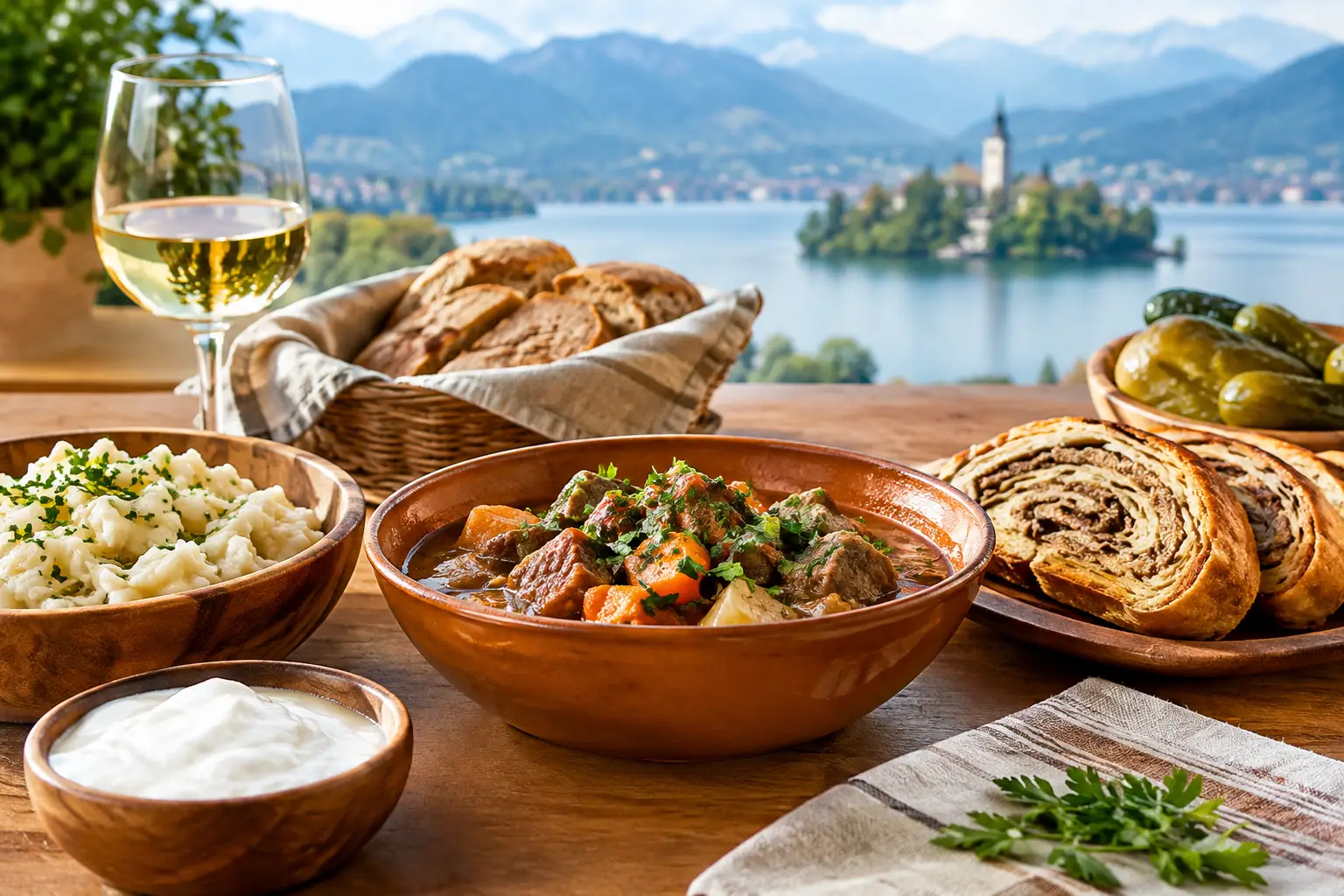
A Slovenian dinner can begin with a small glass of homemade schnapps, but it rarely ends as a quiet meal. To prepare for Slovenian dinner traditions, come ready to taste regional food, raise a toast, hear a story, and possibly join a dance before the evening is over. This is hospitality with a sense of occasion – generous, social, and much more fun when you arrive willing to take part.
For visitors to Ljubljana, that is the real charm. You do not need a detailed knowledge of Slovenian history or folk customs to enjoy the evening. A little curiosity, a comfortable outfit, and an appetite are enough to help you feel at home at the table.
What a Slovenian Dinner Feels Like
Slovenia sits at the meeting point of Alpine, Mediterranean, Pannonian, and Balkan influences, and its table reflects that variety. One region may be known for hearty meat dishes and dumplings, another for seafood and olive oil, another for cured meats, pumpkin seed oil, or wines with a strong local identity. There is no single dish that tells the whole Slovenian story.
What guests often notice first is the warmth of the welcome. Food is meant to be shared, wine is poured as part of the conversation, and hosts take pleasure in introducing what is on the table. A traditional meal is not rushed between sightseeing stops. It is a chance to sit together, laugh, and make room for one more taste, one more toast, or one more song.
At a cultural dinner evening, the meal may also be woven into music, dance, costumes, and games. Rather than watching Slovenian tradition from a distance, you are invited into it. That is especially appealing for couples, families, and friends who want more than a standard restaurant reservation.
Prepare for Slovenian Dinner Traditions With an Open Appetite
A three-course traditional meal is a comfortable introduction for most first-time visitors. Expect honest, satisfying food that is rooted in local ingredients and family cooking. Depending on the menu and region represented, you may encounter soups, seasonal vegetables, cheese, potatoes, roast meats, sausages, dumplings, or sweet dishes that bring a celebratory finish.
Slovenian food can be wonderfully filling, particularly in Alpine-influenced recipes. It is wise not to arrive after a large late-afternoon meal. Save room for the full experience, including the welcome drink and dessert. At the same time, do not assume every traditional menu is heavy. Slovenia’s regional cooking ranges from mountain comfort food to lighter coastal flavors.
If you have dietary requirements, tell the organizer when booking rather than waiting until you are seated. Vegetarian, vegan, gluten-free, and allergy-friendly arrangements may be possible, but traditional recipes often use dairy, eggs, flour, or meat stocks in ways that are not obvious from a dish name. Clear advance notice gives the kitchen the best chance to prepare something enjoyable and safe.
Wine Is Part of the Welcome
Slovenia has a proud wine culture, and a dinner may include local wine served with the meal. You do not need to know grape varieties to appreciate it. Let your host introduce the wine, take a sip, and notice how it works with the food. Asking where it comes from is an easy way to start a conversation.
You may also be welcomed with a small serving of fruit schnapps, often accompanied by dried fruit. It is a traditional gesture of hospitality, not a challenge to prove your drinking stamina. Sip slowly, enjoy the ritual, and feel free to decline politely if alcohol is not for you. A good host wants guests to be comfortable.
Learn One Toast, Then Use It Happily
The Slovenian word for cheers is Na zdravje! It means “to your health,” and it is one of the simplest, most useful phrases a visitor can bring to the table. Say it with a smile when glasses are raised, and you will immediately be part of the moment.
A few easy customs help as well. Wait until the host or group begins the toast before drinking, make brief eye contact when clinking glasses if the setting allows, and keep your toast warm rather than overly formal. There is no need to deliver a speech. “Na zdravje!” is perfect.
The same relaxed approach applies to conversation. Slovenian hosts are often pleased when visitors show genuine interest in the country, its landscapes, food, and regional traditions. Ask about a dish, a song, or a costume. Share a favorite moment from your travels. Dinner is a social exchange, not a test of cultural knowledge.
Dress for Dinner, Music, and a Little Movement
Smart casual clothing is usually the right choice for a Slovenian dinner show. Choose something you would happily wear to a good local restaurant, then make sure you can move comfortably in it. Folk programs are lively, and guests may be invited to stand, clap, join a circle, or learn a few simple dance steps.
Comfortable shoes matter more than formal shoes. Ljubljana’s cobblestone streets are beautiful, but they can be less forgiving after an evening of walking and dancing. Layers are also useful, especially in spring and fall, when temperatures can change quickly between an outdoor stroll and a warm dining room.
You do not need to buy a costume or prepare a performance. The performers handle the traditional dress, music, and choreography. Your job is simply to enjoy the invitation when it comes.
Expect Participation, Not Pressure
Many travelers worry that a participatory dinner show means being put on the spot. In a well-hosted Slovenian evening, participation should feel welcoming, not uncomfortable. You may be asked to clap along, join a simple game, try a dance, or cheer for fellow guests. These are shared moments designed to make strangers feel like a table of friends.
If dancing is not your thing, you can still enjoy the music, costumes, and stories from your seat. A smile and a round of applause go a long way. If you are traveling with children, older relatives, or a group with different comfort levels, this flexible atmosphere is particularly helpful: the enthusiastic dancers can join in while everyone else enjoys the show at their own pace.
For groups, sit where you can mix a little. It is natural to stay close to your travel companions, but a traditional dinner is one of the easiest places to meet other visitors. A toast or a shared laugh during a game can turn an ordinary vacation evening into a story you keep telling after you return home.
Give Yourself Time to Arrive
Do not schedule a museum sprint or a long day trip right up to the start of dinner. Arrive with enough time to settle in, freshen up, and find the venue without stress. A cultural dinner is better when you are present for the welcome rather than rushing through the door after the first toast.
If you are staying in central Ljubljana, plan an easy walk or a short ride to the venue. For coach tours, multigenerational families, or groups of 10 or more, confirm timing, accessibility needs, and meal preferences in advance. A fixed plan makes the evening easy for the organizer and relaxing for every guest.
Traditional Slovenian Evening brings these elements together in one festive program: a three-course meal, wine, a schnapps welcome, folk music, regional dances, stories, games, and a small gift to take home. It is an easy choice when you want an organized night out that still feels personal and proudly local.
The best preparation is not memorizing every custom. Come hungry, say “Na zdravje,” wear shoes you can move in, and leave a little space in the evening for unexpected laughter.