
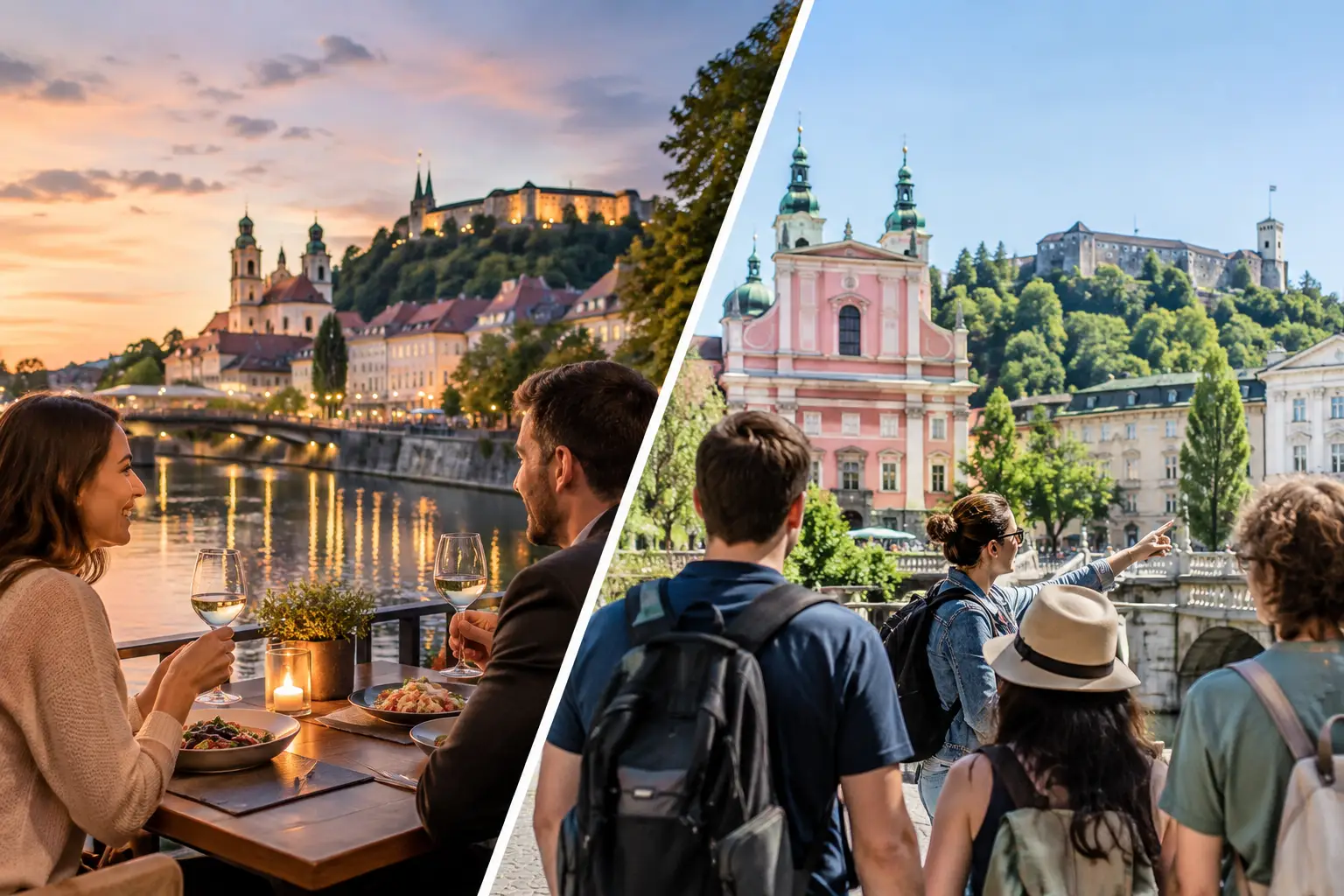
Ljubljana is wonderfully walkable, but after a full day of bridges, riverside cafés, castle views, and cobbled streets, your evening choice matters. A Ljubljana dinner versus walking tour is not simply a question of food or sightseeing. It is a choice between seeing the city from the outside and joining a Slovenian celebration from the inside.
Both can be memorable. The better option depends on how long you are staying, how much energy you have left, who you are traveling with, and whether you want your evening to feel like a guided introduction or a shared local occasion. Here is how to choose with confidence.
Ljubljana Dinner Versus Walking Tour: The Real Difference
A walking tour is built around place. It helps you understand Ljubljana’s layout, architecture, legends, and daily rhythm. You may hear why the dragon is everywhere, learn about Jože Plečnik’s striking design, cross the Triple Bridge, and pick up useful recommendations for the rest of your stay. For first-time visitors with only a short time in the capital, that orientation can be genuinely valuable.
A traditional Slovenian dinner experience is built around people. Instead of moving from landmark to landmark, you settle into one welcoming room and meet Slovenia through its table, music, dances, stories, costumes, and games. You are not trying to keep up with a guide or photograph the next façade. You sit down, raise a glass, enjoy a three-course meal, and become part of the evening.
The distinction is especially clear after sunset. Ljubljana’s historic center is lovely at night, but the details of a city tour can blur when you are tired, hungry, or managing a group with different interests. A festive dinner show gives everyone a place to gather, eat well, laugh, and enjoy a program designed to make Slovenian culture easy to understand and fun to share.
Choose a Walking Tour If You Want Context for the City
A walking tour is often the right call early in your visit. If you have just arrived and want to get your bearings, a guide can show you the old town’s essential sights while explaining what makes Ljubljana different from other Central European capitals. You will leave with a better sense of where to return for coffee, where to shop, and which corners deserve another look in daylight.
It also suits travelers who enjoy history in detail. Ljubljana has layers: Roman roots, Habsburg influences, a powerful modernist architectural identity, and a relaxed contemporary culture beside the Ljubljanica River. A skilled guide can connect those threads far better than a self-guided stroll.
There are trade-offs. Walking tours tend to be weather-dependent and can feel long after a day of travel, especially for families with younger children, older relatives, or anyone who has already spent hours on their feet. Evening tours may also finish with everyone still needing to choose and reserve a restaurant. That is easy enough for independent travelers, but less appealing when your group wants one simple plan.
A walking tour gives you a city map in your mind. It does not always give you a taste of how Slovenians celebrate together.
Choose a Slovenian Dinner Experience If You Want a Night to Remember
A dinner show makes more sense when your priority is the feeling of the destination rather than a long list of landmarks. It is particularly rewarding on a first night, a final night, or any evening when you want an organized plan that combines dinner and entertainment without the effort of arranging separate reservations.
At Traditional Slovenian Evening, guests are welcomed with homemade schnapps and dried fruit before sitting down to a three-course traditional meal with wine. The night continues with live folk music, regional dances, stories, colorful costumes, and participatory games. This is not a quiet restaurant meal with background music. It is an upbeat cultural gathering where guests are invited to clap, learn, laugh, and sometimes dance.
That participation is what changes the experience. Watching a folk performance can be enjoyable, but joining the room as performers lead games and bring guests into the rhythm creates the kind of memory that lasts beyond a photo of a pretty square. Couples find it more personal than a standard date-night dinner. Families enjoy that it holds different generations’ attention. Friend groups appreciate that the evening has energy without requiring them to plan a big night out.
The practical advantages are just as appealing. Your meal, wine, entertainment, and cultural program are all in one booked experience. There is no need to compare menus, wonder whether a restaurant will feel special, or search for a separate performance afterward. For visitors with limited time, that convenience leaves more room for enjoying Ljubljana rather than organizing it.
Food Is Part of the Story, Not an Intermission
The biggest reason a dinner experience can beat a walking tour is simple: food carries culture in a way facts alone cannot. Slovenia is small, but its culinary traditions reflect Alpine, Mediterranean, Pannonian, and Balkan influences. A shared meal offers a natural introduction to that variety, especially when it is paired with stories, local wine, and music from across the country.
This matters if you are curious about Slovenian culture but do not know where to begin. You do not need prior knowledge of folk traditions or regional dishes. The format is welcoming by design. You arrive as a visitor, but the evening gives you enough context to understand that Slovenia is more than its postcard views, castles, and outdoor adventures.
A regular restaurant can certainly serve excellent food, and it may be the best option if you are seeking a quiet meal, a particular cuisine, or a flexible late-night schedule. But a restaurant reservation is usually just dinner. A cultural dinner show turns dinner into the main event.
What Works Best for Groups?
For groups, the answer is usually clear. A walking tour is useful when everyone wants a shared introduction to Ljubljana and is comfortable walking at the same pace. It works well for school groups, architecture enthusiasts, or travelers with a free afternoon.
A Slovenian dinner experience is often the stronger evening choice for birthdays, reunions, multigenerational families, coach groups, and travel itineraries. Everyone receives the same welcoming structure: food, drinks, a show, and opportunities to participate at their own comfort level. No one needs to be the organizer who chooses a restaurant, explains the local customs, or keeps the conversation moving.
For travel agents and tour leaders, this also solves a familiar itinerary challenge. Guests want something unmistakably local, but schedules are tight and preferences vary. A fixed, organized evening program offers a reliable way to bring a group together while showing the joyful, social side of Slovenia.
The Best Answer May Be Both
If your itinerary allows, do not treat this as an either-or decision. Take a walking tour on your first afternoon or morning, when you have energy for stories about the city and daylight for its architecture. Then reserve a traditional dinner experience for an evening when you want to slow down and celebrate.
The two activities do different jobs. One helps you recognize Ljubljana. The other helps you feel welcomed in Slovenia.
If you only have one evening, ask yourself what you will remember most when you get home. You may remember the Dragon Bridge and the pink Franciscan Church from a walk on your own. It is harder to recreate the moment a room full of travelers raises a glass, hears live folk music, and joins a Slovenian dance with people who were strangers an hour earlier.
Choose the walking tour when you want the city explained. Choose the dinner experience when you want the country to greet you with a full table, a lively song, and an invitation to join the celebration.