
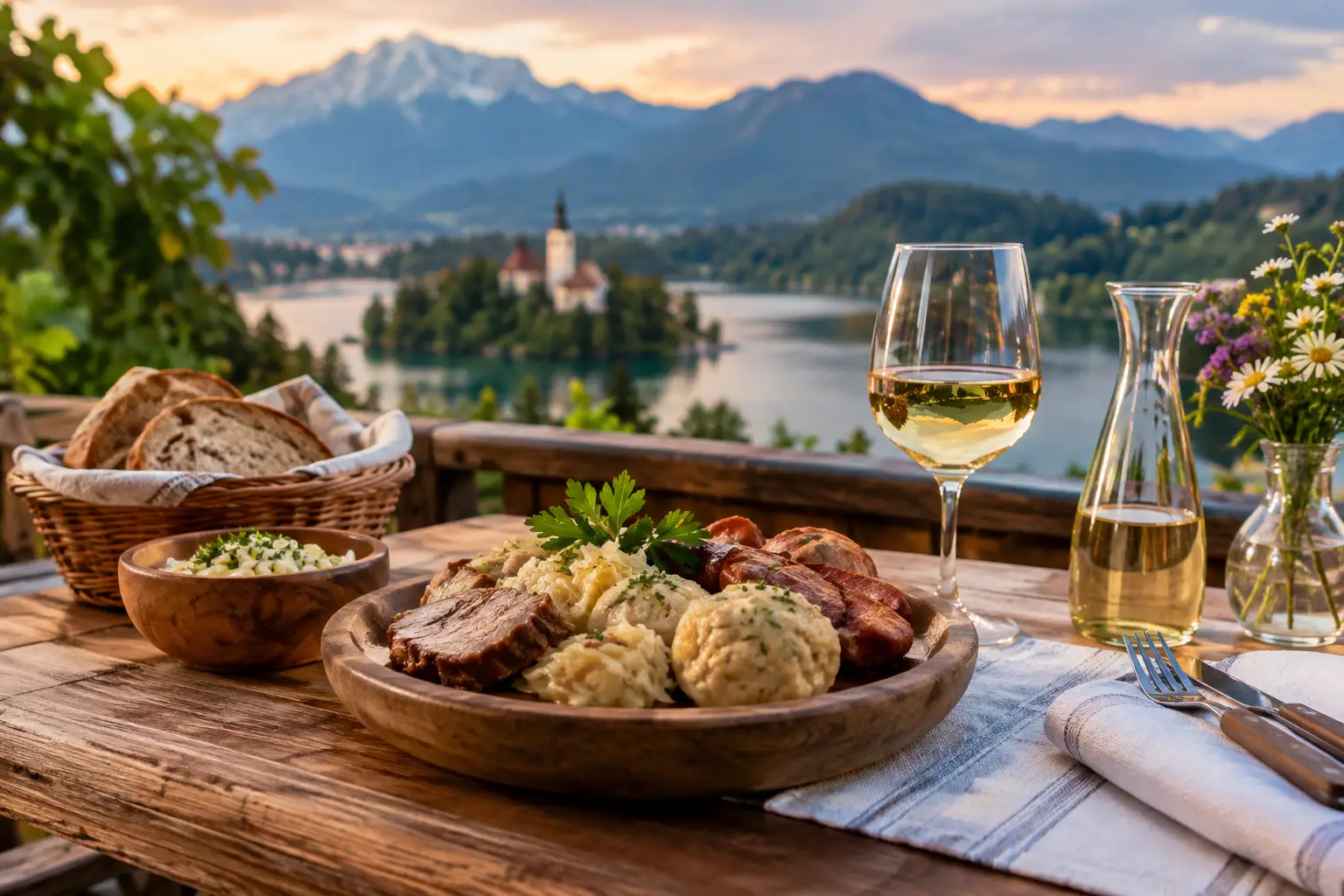
A memorable Slovenian evening does not begin when the first plate arrives. It begins with a welcome, a shared toast, a room full of anticipation, and the feeling that you have been invited into something local rather than simply seated for dinner. That is the pleasure of heritage dining: food becomes the starting point for music, stories, laughter, and the traditions that give a place its character.
For visitors in Ljubljana, it is an easy way to experience more of Slovenia in one joyful night. Instead of spending days researching which dishes to order, where to hear folk music, or how to find a cultural performance that feels welcoming, guests can gather around one table and let the evening unfold.
What Heritage Dining Really Means
Heritage dining is not a themed meal with a few old-fashioned decorations. At its best, it brings together the flavors, customs, rituals, and hospitality that people associate with home. You taste regional food, hear the music that has accompanied celebrations for generations, and discover why a toast, a dance, or a simple shared game matters.
In Slovenia, this matters because the country’s culture is wonderfully varied. Alpine villages, the Adriatic coast, the Karst region, the Pannonian plains, and the green central heartland have all shaped what people eat, drink, sing, and celebrate. A single evening cannot tell every Slovenian story, but it can offer a lively introduction to the country’s many regional traditions.
The difference is participation. A museum can show you a folk costume behind glass. A heritage dinner can introduce you to performers wearing it, moving to the music, explaining a custom, and inviting you to join the fun. You are not expected to arrive with expert knowledge. Curiosity and a willingness to raise a glass are more than enough.
A Slovenian Table Is Made for Sharing
Traditional Slovenian food has the kind of honest, comforting appeal that suits a long social evening. The cuisine reflects its neighbors while remaining distinctly its own: Central European heartiness, Mediterranean freshness, Balkan influences, and local ingredients from forests, farms, vineyards, and mountain pastures.
A well-planned three-course meal gives first-time visitors a satisfying introduction without turning dinner into a lecture. You may encounter seasonal soups, handmade dumplings, roasted meats, vegetable dishes, potatoes, bread, or desserts that recall family kitchens and festive tables. Recipes vary from region to region, and that variation is part of the story. There is no single dish that can represent all of Slovenia.
Wine deserves its place at the table, too. Slovenia has a proud winemaking tradition, with distinctive wine regions producing crisp whites, rich reds, and everything between. Served alongside a traditional meal, local wine is more than an extra. It helps guests slow down, talk across the table, and experience the generous rhythm of Slovenian hospitality.
Then comes the welcome ritual that many travelers remember most: homemade schnapps served with dried fruit. It is small, cheerful, and unmistakably social. A toast is an invitation to connect, whether you arrived as a couple, with family, or surrounded by new friends from different corners of the world.
Why Food Alone Is Not the Whole Experience
A wonderful restaurant reservation can introduce you to Slovenian cuisine. But heritage dining adds the parts of culture that are harder to find on a menu: the melodies, the dance steps, the local jokes, the stories behind a custom, and the easy laughter that happens when strangers are encouraged to join in.
Live folk music changes the atmosphere immediately. It gives rhythm to the meal and brings energy into the room without requiring anyone to understand every word. Regional dances add another layer, showing how different communities have expressed celebration through movement, costume, and music.
The best cultural evenings keep this welcoming rather than formal. Guests should not feel as if they are attending a school presentation after dinner. They should feel free to clap along, try a simple step, cheer for the performers, and laugh when a game brings the room together. For families and multigenerational groups, that mix is especially valuable. Grandparents can enjoy the stories, adults can enjoy the wine and music, and younger guests can enjoy the movement and surprise.
Of course, not every traveler wants the same pace. Some people prefer a quiet meal focused entirely on food, while others want an evening with music, interaction, and a little celebration. Heritage dining is ideal for the second kind of traveler: people who want their dinner in Ljubljana to become one of the stories they tell when they get home.
The Value of an Organized Cultural Evening
Travel is full of choices, and even a city as welcoming as Ljubljana can leave visitors wondering where to begin. Which restaurant serves traditional dishes? Is the folklore performance authentic? Will the venue be easy to reach? Can a group be seated together? Is it suitable for guests who do not speak Slovenian?
An organized dinner show removes that uncertainty. The meal, entertainment, timing, and welcome are designed to work together. International guests can relax because the experience is created for them, not simplified for them. Good hosts make traditions understandable, offer clear guidance, and create a setting where no one feels left outside the celebration.
This is particularly useful for groups. A couple can enjoy the shared atmosphere without doing any planning. Families have an evening activity that does not require separate tickets for dinner and a show. Friends can celebrate together without assigning someone the task of organizing every detail. Tour leaders and travel planners gain a fixed, dependable cultural program that brings a group together after a day of sightseeing.
Traditional Slovenian Evening brings this format to life with a three-course meal, wine, a schnapps welcome, live folk music, regional dances, participatory games, costumed performers, and a guest gift to take home. The experience is built around one simple idea: Slovenian culture is at its most memorable when it is shared.
How to Choose a Heritage Dining Experience
Not all cultural dinners offer the same balance of food, entertainment, and participation. Before booking, look for a clear description of what is included. A strong experience should make it easy to understand whether the ticket covers dinner, drinks, performances, and any extras. That clarity matters, especially for travelers managing a schedule or group budget.
Consider the atmosphere you want. If you are looking for a romantic, quiet meal, a traditional restaurant may be the better choice. If you want live music, dancing, storytelling, and a friendly social room, choose a dinner show designed for guests to take part. Neither option is more authentic by default. Authenticity depends on care, local knowledge, quality performers, and whether the experience respects the traditions it presents.
For groups, practical details deserve attention as well. Check whether the program can accommodate group sizes, dietary needs, language expectations, and a fixed timetable. A polished cultural evening should feel spontaneous and festive to guests while being carefully organized behind the scenes.
Come Hungry, Leave With a Story
The greatest souvenir from a heritage dinner is rarely the item you carry away at the end of the night. It is the memory of a song you tried to follow, a dance that made your table laugh, a toast shared with people you had only just met, or a dish that made you curious to learn more about Slovenia.
That is why these evenings matter. They turn culture from something observed at a distance into something tasted, heard, and enjoyed together. When you are planning your time in Ljubljana, save one evening for a table where Slovenia is not only served, but celebrated.