
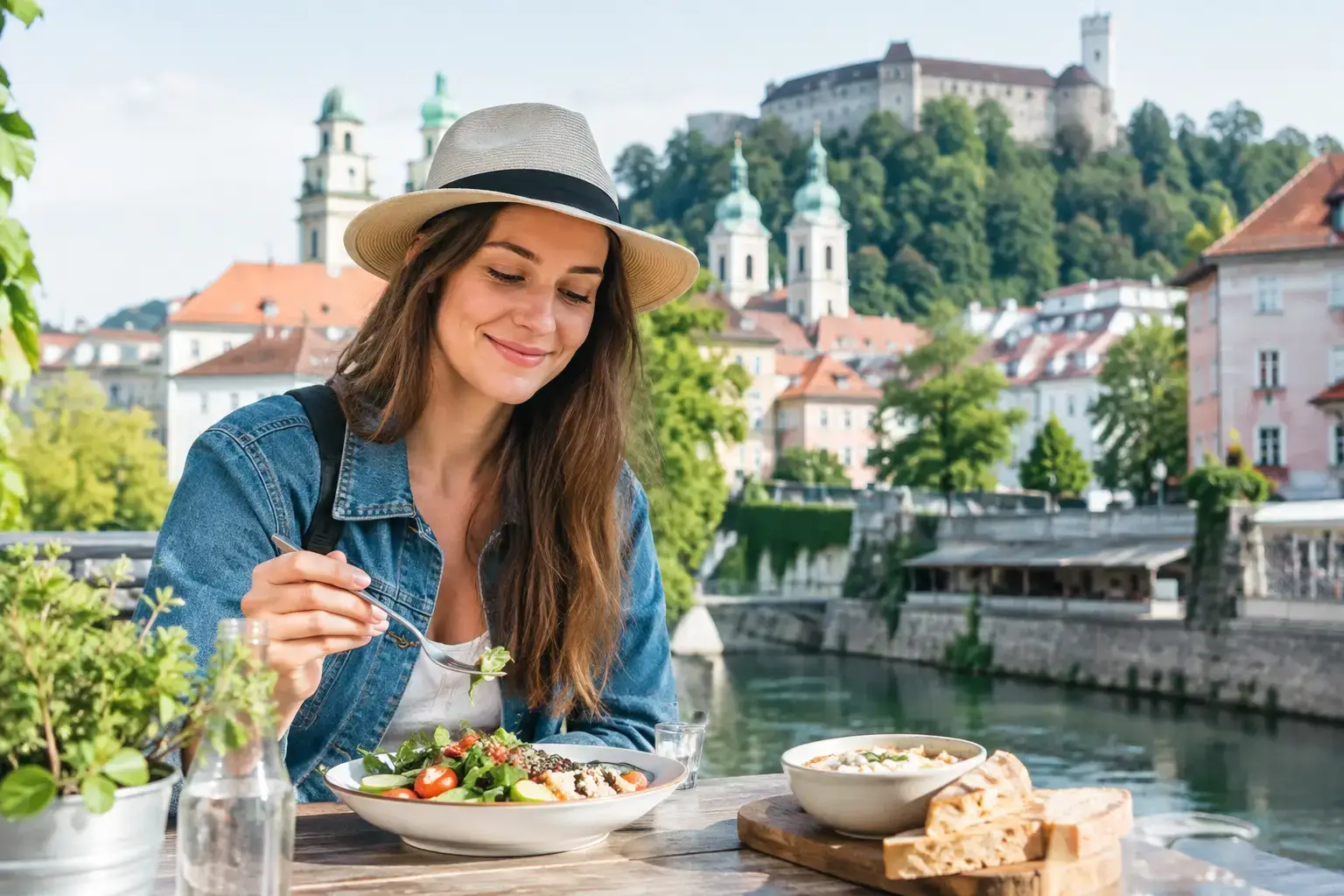
A memorable Slovenian meal should begin with anticipation, not uncertainty. This food allergies travel guide is designed for travelers who want to enjoy Ljubljana’s warm hospitality, regional flavors, and festive dining while taking sensible steps to manage a food allergy away from home.
Slovenia is wonderfully food-focused. A single table can bring together Alpine cheeses, Adriatic seafood, hearty Central European-style dishes, seasonal vegetables, pastries, wine, and family recipes passed down through generations. That variety is part of the joy, but it also means that ingredients may appear in places you do not expect. A little planning makes it much easier to relax, raise a glass, and join the celebration.
Start Your Food Allergies Travel Guide Before You Fly
The most useful allergy preparation happens before your suitcase is zipped. Speak with your allergist or doctor about your destination, particularly if you have a history of severe reactions. Carry prescribed medication in your hand luggage, ideally in its original labeled packaging, and bring more than you expect to need in case travel plans change.
If you use epinephrine, do not place it in checked baggage. Temperatures in the cargo hold and the risk of delayed luggage are not worth the gamble. Keep it accessible during flights, transfers, city walks, and excursions outside Ljubljana. Travel companions should know where it is and how to use it.
It also helps to distinguish clearly between an allergy, celiac disease, an intolerance, and a dietary preference when communicating with restaurants. These needs all deserve respect, but they require different kitchen precautions. Saying, for example, “I have a severe peanut allergy. Even a small amount or cross-contact can make me sick” gives a host much clearer information than simply saying you cannot eat peanuts.
Before departure, save the local emergency number, 112, in your phone. This is the European emergency number and can connect you with urgent help. Consider travel insurance that covers medical care, too. It is the kind of practical detail travelers hope never to use, but it creates real peace of mind.
Learn a Few Slovenian Allergy Phrases
English is widely spoken in Ljubljana, especially in hotels, visitor attractions, and restaurants serving international guests. Still, an allergy card in Slovenian is a smart extra layer of communication. A printed card is easier for a server to take to the kitchen than a rushed conversation across a busy dining room.
Use simple, direct wording and name both the allergen and the level of risk. You can include phrases such as:
- “Imam alergijo na …” – I am allergic to …
- “Ali ta jed vsebuje …?” – Does this dish contain …?
- “Ne smem jesti …” – I must not eat …
- “Prosim brez …” – Please without …
For a severe allergy, add that food must not touch the allergen and that separate utensils and preparation surfaces are needed where possible. Translation tools are helpful, but a professionally prepared allergy card can reduce ambiguity. Bring one for each traveler with a food allergy, and keep a photo of it on your phone.
Know Where Allergens May Appear in Slovenian Food
Slovenian cuisine changes from region to region, which is exactly what makes it such a rewarding part of a visit. It also means there is no single rule for every dish. Ask about the recipe being served that day rather than assuming that a familiar dish is always prepared the same way.
Dairy can appear in soups, dumplings, sauces, potato dishes, pastries, and spreads. Wheat is common in breads, noodles, breaded dishes, dumplings, and desserts. Eggs may be used in pasta, batters, pastry, and creamy fillings. Nuts can be found in cakes, rolled pastries, and festive sweets, while sesame may appear on baked goods.
For travelers with fish or shellfish allergies, take care with coastal and Mediterranean-influenced menus, seafood risottos, broths, and mixed platters. Meat dishes may be brushed with sauces or served with a gravy that contains flour, dairy, celery, mustard, or wine. Pork, beef, and game are central to many traditional recipes, so vegetarian travelers should ask separately about broth, lard, or meat-based stock.
Gluten-free travelers should be especially careful with cross-contact. A dish made without wheat is not automatically safe for someone with celiac disease if it shares a fryer, cutting board, toaster, or preparation area with flour-based foods. The right choice depends on your sensitivity and the kitchen’s ability to accommodate it honestly.
Contact Restaurants Before Booking
A quick message before reserving can transform a stressful meal into an enjoyable one. Give the restaurant enough notice to check ingredients, speak with the chef, and tell you whether they can safely help. This is particularly useful for set menus, group dinners, tasting menus, and cultural events where food is prepared for many guests at once.
Ask specific questions: Can you accommodate my allergy? Which menu items are suitable? Can the kitchen prevent cross-contact? Is there a backup option if the planned dish is unsuitable? A clear response is encouraging. A vague promise that something is “probably fine” is a sign to choose another place.
At Traditional Slovenian Evening, guests should share allergy requirements while booking rather than waiting until arrival. The experience is built around generous traditional food, wine, music, dancing, games, and shared tables, so advance notice gives the team the best opportunity to advise on the menu and available arrangements. No responsible host should promise what the kitchen cannot safely deliver, and travelers should appreciate that honesty.
Speak Up Again at the Table
Even after messaging ahead, repeat your allergy to the person serving you. Menus change, staff shifts change, and the final plate may include a garnish or sauce that was not discussed. This is not being difficult. It is a normal, sensible part of managing an allergy while traveling.
Point to your allergy card, ask the server to confirm with the kitchen, and wait for a confident answer. If the server is unsure, ask politely whether the chef can confirm. Do not feel pressured to accept a dish just because it has already arrived. A replacement meal or a simple plate of plainly prepared food is always preferable to an avoidable reaction.
Buffets, shared platters, and family-style dinners deserve added caution. Serving spoons move between dishes, crumbs travel easily, and labels may not tell the whole story. If cross-contact presents a serious risk, request a separately plated portion before the shared meal is set out.
Pack Smart Snacks for Travel Days
Long airport waits, delayed trains, and late arrivals are when careful plans can unravel. Pack familiar, shelf-stable snacks that meet your needs, especially for the flight and first day of your trip. This gives you time to find restaurants you feel comfortable with instead of choosing the first available option when you are hungry.
Ljubljana has supermarkets, bakeries, markets, cafes, and restaurants, but labels and offerings will not always be familiar. When buying packaged food, check the ingredient list and allergen statement every time, even for a brand you recognize. Recipes and labeling can differ by country. For fresh foods, choose simple items whose ingredients are easy to identify when that better suits your risk level.
Keep the Evening Joyful, Not Rigid
Food allergies require attention, but they do not have to shrink your Slovenian adventure. Build a little extra time into each meal, choose hosts who communicate clearly, and let your travel companions know what support you may need. For some travelers, that means selecting naturally simple dishes. For others, it means choosing only venues that can demonstrate strong allergen procedures. Both approaches are valid.
The goal is not to eat with fear or to miss every special occasion. It is to make informed choices so there is room for the good part: the clink of glasses, a table full of conversation, a folk song that invites you to join in, and a Ljubljana evening you can enjoy with confidence.