
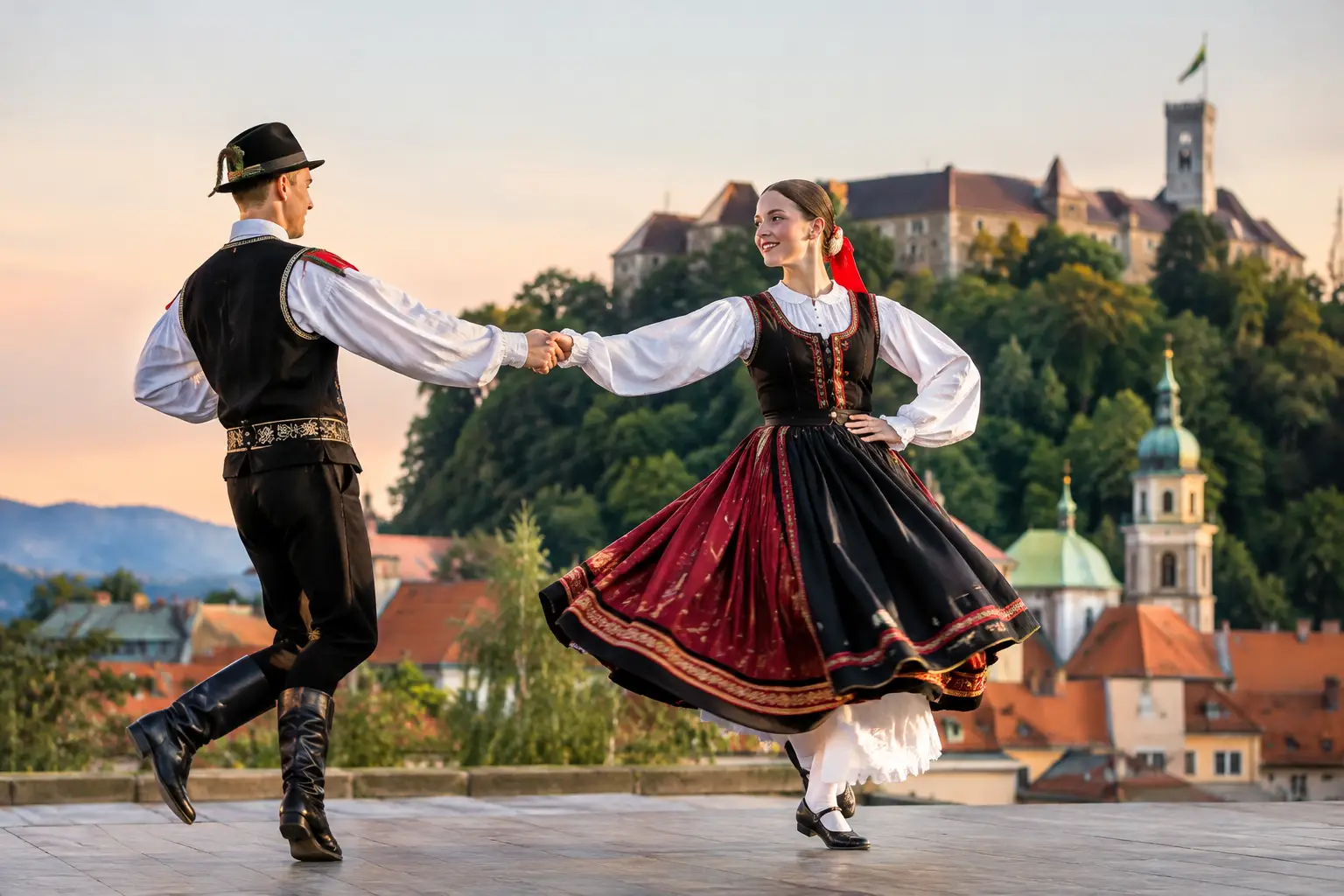
A fast polka begins, embroidered skirts turn across the floor, and suddenly a room full of travelers is clapping in the same rhythm. The best Slovenian dance performances are not simply something to watch from a dark auditorium. They are a chance to feel how Slovenia celebrates: with live music, proud regional costumes, good food on the table, and enough energy to tempt even shy guests onto the dance floor.
For visitors with only a few evenings in Ljubljana, a dance performance can reveal more of the country than a standard restaurant meal or a quick museum visit. Slovenian folk dance carries stories of village gatherings, courtship, harvest celebrations, mountain communities, and the distinct character of regions that may look close together on a map but dance very differently.
What Makes Slovenian Folk Dance Special?
Slovenia is small, but its dance heritage is wonderfully varied. Its traditions have been shaped by Alpine, Balkan, Pannonian, and Mediterranean influences, so there is no single Slovenian style. One performance may move from the bouncing, cheerful energy of a polka to stately partner dances, circle formations, and intricate steps that require dancers to react quickly to the music and one another.
Costume is part of the story. Performers may wear carefully recreated regional clothing, from bright skirts and aprons to vests, hats, boots, and decorative details that once reflected local customs and social occasions. A good show does more than put these costumes on display. It gives guests context: why a particular rhythm matters, where a dance comes from, and how people would have experienced it together.
Live accompaniment makes a major difference. Accordion, fiddle, clarinet, and traditional folk instruments bring warmth and spontaneity that recorded music cannot quite match. Listen for the moment when the tempo changes and the dancers answer it with a new pattern. That exchange between musicians and dancers is where a performance becomes a real celebration rather than a historical demonstration.
Where to See the Best Slovenian Dance Performances
The right performance depends on the evening you want. Some travelers prefer a formal stage production with theatrical lighting and a quiet audience. Others want an informal setting where they can eat, toast with local wine, hear stories, and learn a few steps themselves. Both can be memorable, but they offer very different ways into Slovenian culture.
Folklore festivals and seasonal events
During warmer months and around local holidays, Ljubljana and towns across Slovenia host outdoor cultural programs, village festivals, and folklore gatherings. These can be a wonderful choice for travelers who enjoy a lively public atmosphere and do not mind a little unpredictability. You may see several folklore groups in one program, often representing different regions and age groups.
The trade-off is planning. Festival schedules can change with weather, public holidays, and local programming, and performances may not be available on the exact night you are in town. They are ideal when you have flexibility in your itinerary and want to experience a community event alongside local residents.
Theater and cultural-center programs
Ljubljana’s cultural venues occasionally present dance productions inspired by Slovenian folklore, traditional music, or contemporary interpretations of national heritage. These performances can be visually polished and artistically ambitious. They suit guests who love dance as an art form and are happy to focus fully on the stage.
However, a theater program may be less accessible for first-time visitors who want explanations in English or a social introduction to local customs. It can also be more about the choreographer’s interpretation than about learning the recognizable dances and rituals of everyday Slovenian celebration. Check the program carefully if language support and traditional content matter to you.
Participatory dinner shows
For many international visitors, the most rewarding option is an evening that brings dance, music, food, and hospitality into one shared event. Instead of choosing between dinner and entertainment, you can enjoy both around the same table.
At a well-organized folklore dinner show, performers introduce dances from more than one Slovenian region, play live music, share short stories, and invite guests to join simple group dances and games. The invitation matters. Watching skilled dancers is exciting, but trying a few steps yourself creates the memory that follows you home.
Traditional Slovenian Evening offers this kind of welcoming format in Ljubljana, pairing a three-course Slovenian meal, wine, homemade schnapps with dried fruit, live folk music, regional dances, costumes, games, and a small guest gift. It is especially convenient for couples, families, friend groups, and tour groups who want one reliable evening plan rather than separate dinner reservations and performance tickets.
How to Choose a Performance Worth Your Evening
The word “best” means something different for every traveler. A dedicated dance fan may look for technical choreography and a formal company. A family may care more about an early start, a relaxed setting, and whether children can participate. A couple on a short city break may simply want a joyful evening that feels distinctly Slovenian without spending hours researching options.
Look first at the format. If you want to sit back and observe, choose a staged performance. If you want conversation, a festive atmosphere, and an introduction designed for visitors, a hosted dinner show will usually fit better. For groups, an experience with a fixed schedule and clear inclusions can remove a great deal of logistics.
Then consider regional variety. Slovenia’s dance traditions are most interesting when a performance shows contrast: Alpine liveliness, eastern folk influences, coastal color, and the changing rhythms of different communities. A program that gives a little background between dances helps guests understand what they are seeing without turning the evening into a lecture.
Finally, pay attention to the role of the audience. Some people prefer to remain spectators, and that is perfectly fine. But if your group enjoys laughing together, taking photos, clapping along, and learning an easy dance, choose a performance where participation is genuinely part of the program, not an awkward afterthought.
A Few Steps to Know Before You Go
You do not need any dance experience. Folk events are built around shared rhythm, not perfection, and the simplest dances are taught so newcomers can follow along. Wear comfortable shoes if you hope to participate. You will not need formal attire for most tourism-focused performances, though smart casual clothing is a comfortable choice for a dinner setting.
Arrive with curiosity rather than a checklist. Slovenian folk culture is not frozen in time. The dancers and musicians you meet are carrying traditions forward, often presenting them in a way that welcomes modern international audiences. That does not make the experience less authentic. It is how living traditions survive: by being enjoyed, repeated, and shared.
Why a Dance Performance Belongs on a Ljubljana Itinerary
Ljubljana is easy to enjoy through its riverfront cafés, markets, architecture, and castle views. Yet dance adds the human side of the country. In an hour or two, you can hear the music people celebrated with, see regional identities expressed through movement, taste familiar dishes in a new context, and meet fellow travelers who arrived as strangers.
This is particularly valuable if you are traveling beyond Ljubljana later. A folk performance gives useful context for visits to Alpine villages, wine regions, the coast, or the eastern plains. You begin to recognize that Slovenia is not one uniform tradition but many local cultures held together by a strong sense of welcome.
Leave room in your itinerary for an evening with noise, music, and a little friendly embarrassment on the dance floor. The best souvenir may be the one you cannot pack: the rhythm you still remember when someone starts clapping.