
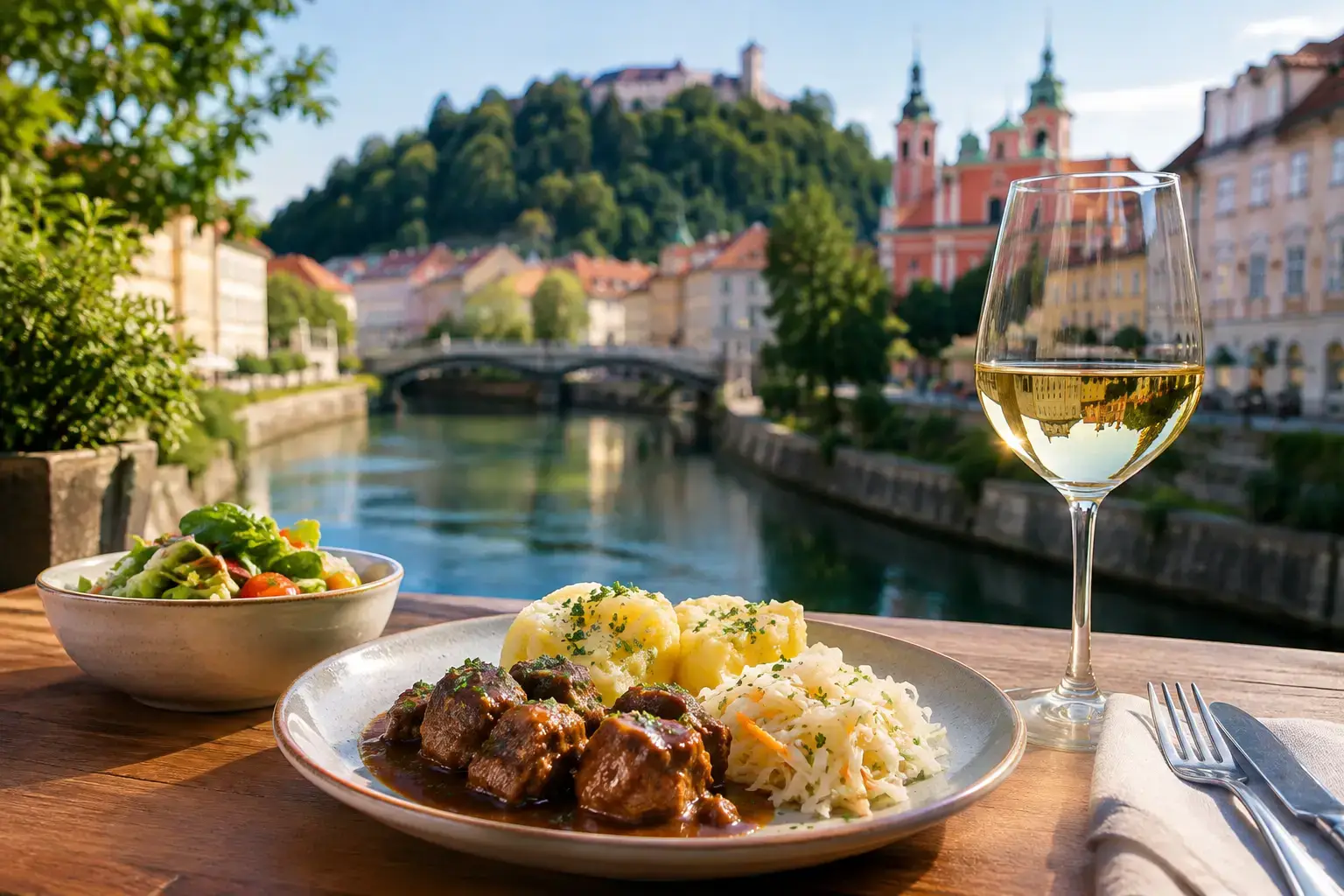
A Slovenian cuisine guide should begin with one happy fact: this is not a country where you need to choose between a serious meal and a good time. Slovenia’s food is made for long tables, full glasses, family recipes, and the kind of welcome that turns strangers into dinner companions. In one small country, Alpine comfort food meets Mediterranean ingredients, Pannonian fields, and the flavors of the Balkans and Central Europe.
For visitors to Ljubljana, that variety is especially easy to enjoy. You can start the day with a market pastry, eat a rustic regional lunch, then spend the evening with wine, music, stories, and dishes that have been served in Slovenian homes for generations. Come hungry, stay curious, and do not be surprised if dinner ends with dancing.
What Makes Slovenian Food So Varied?
Slovenia sits where several European food cultures meet, and its cooking reflects every direction on the map. The Julian Alps bring dairy, potatoes, buckwheat, mushrooms, and filling stews. The Adriatic coast contributes olive oil, seafood, fresh herbs, and salt. Eastern Slovenia is known for grains, pork, pumpkin seed oil, and rich baked specialties, while the Karst region is celebrated for cured meats and bold local flavors.
That means there is no single dish that tells the entire Slovenian story. A plate in the mountains may feel warming and rustic, while a meal near the coast can be bright with fish, vegetables, and olive oil. Even within a short drive, recipes, wine traditions, and the names of familiar dishes can change.
The common thread is hospitality. Slovenian food is rarely fussy for its own sake. It is honest, seasonal, and generous, often built from ingredients that were available close to home. Many traditional recipes developed to feed families after work in fields, forests, vineyards, or mountain pastures. They still make perfect sense after a day of sightseeing in Ljubljana.
Slovenian Cuisine Guide: Dishes to Try
Potica: The Celebration Cake
If you try only one Slovenian dessert, make it potica. This rolled pastry is traditionally filled with walnuts, though you may also find versions with tarragon, poppy seeds, cottage cheese, or other fillings. Its spiral slice is instantly recognizable, and it is closely associated with holidays, family gatherings, and festive tables.
Walnut potica is sweet but not overwhelmingly rich, making it an ideal companion to coffee or a small glass of homemade schnapps. It is also one of the best edible souvenirs of a Slovenian celebration, although a fresh slice shared at the table is hard to beat.
Štruklji: Soft, Filled Dumplings
Štruklji are rolled dumplings filled with sweet or savory ingredients. Depending on the recipe, they may contain cottage cheese, walnuts, apples, tarragon, or herbs, then be boiled, baked, or steamed. Their texture is soft and comforting, somewhere between a dumpling, pastry, and a warm hug from a Slovenian grandmother.
Savory štruklji can appear beside a main course, while sweet versions are served as dessert. The filling matters, but so does the setting. These are dishes that reward slowing down and sharing a meal rather than eating on the run.
Kranjska Klobasa: Slovenia’s Famous Sausage
Kranjska klobasa, or Carniolan sausage, is one of Slovenia’s most recognizable traditional foods. Made from high-quality pork and gently smoked, it is usually served simply with mustard, horseradish, sauerkraut, or crusty bread. The simplicity is the point: when the sausage is good, it needs very little decoration.
It is a satisfying choice for travelers who want something familiar but distinctly Slovenian. Pair it with a local beer or a crisp white wine, and you have an easy introduction to the country’s hearty side.
Jota and Other Warming Stews
On a cool evening, look for jota, a hearty stew associated especially with the Primorska and Karst regions. It commonly combines beans, potatoes, sauerkraut or turnip, and smoked pork. It has the tang of fermented vegetables, the comfort of a slow-cooked soup, and enough substance to count as a meal.
Slovenia has many more soups and stews worth trying, often featuring mushrooms, barley, cabbage, beans, or game. These are not always the most photogenic dishes on a menu, but they are often the ones visitors remember when they think back to a cold day and a warm table.
Idrija Žlikrofi: Small Dumplings, Big Tradition
From the town of Idrija come žlikrofi, small potato-filled dumplings shaped with a distinctive folded edge. They are often served with a meat sauce, but lighter presentations exist as well. Their modest size makes them easy to underestimate, yet the careful shaping and regional pride behind them make them special.
This is a wonderful dish for food lovers who want to move beyond the usual travel checklist. It shows how Slovenia turns simple pantry ingredients into something with a strong local identity.
Save Room for Bread, Cheese, and Cured Meats
A Slovenian table often becomes more generous the longer you sit at it. Fresh bread, local cheese, cured ham, pickled vegetables, and seasonal spreads may arrive before or alongside the main meal. In the Karst region, air-dried pršut is a prized specialty, often served in thin slices with bread and a glass of local wine.
Cheese lovers should keep an eye out for Alpine cheeses, especially those made from cow’s milk in mountain regions. Their flavor can range from mild and creamy to nutty and aged. Pumpkin seed oil is another ingredient worth seeking out, particularly in the east, where its dark color and toasted aroma transform salads, soups, and even desserts.
What to Drink With Slovenian Food
Slovenia may be small, but it has a serious wine culture. Its three major wine-growing areas offer very different styles. Primorska, near the coast, is known for expressive wines shaped by Mediterranean influence. Podravje in the northeast produces aromatic whites and excellent sparkling wines, while Posavje offers approachable regional favorites and traditional cviček, a light, refreshing red.
For a first glass, ask for a local white wine with seafood, cheese, or lighter dishes. A fuller red can be a fine match for sausage, game, or cured meat. The best choice depends on the region and the menu, so this is one place where a server’s recommendation is worth taking.
Then there is schnapps. Homemade fruit brandies are part of many warm Slovenian welcomes, often served in small glasses with dried fruit. Sip rather than rush. It is a ritual of hospitality, not a race.
How to Eat Like a Guest, Not Just a Tourist
The best Slovenian meal is rarely about checking off the most dishes. Choose a few regional specialties, ask what is seasonal, and give yourself time to enjoy the table. If you are visiting in autumn, mushrooms, chestnuts, and hearty stews may take center stage. In spring and summer, you may find fresh vegetables, herbs, lighter cheeses, and coastal flavors. Winter calls for dumplings, sausages, soups, and desserts that make cold weather feel like an excuse for another helping.
Vegetarian travelers can eat well in Slovenia, especially in Ljubljana, but traditional menus may lean toward pork, cured meat, and meat-based sauces. Ask clearly about broths, sauces, and fillings if you have dietary needs. Vegan and gluten-free options are increasingly available in the city, though the choice is more limited in smaller towns and in very traditional settings.
For a first evening in Ljubljana, a shared cultural dinner can be an easy and joyful starting point. Traditional Slovenian Evening brings regional food, wine, folk music, dancing, games, and stories together in one festive experience, so guests can taste more than one part of Slovenian culture at the same table.
The most memorable meal in Slovenia may be a carefully prepared restaurant dish, a market snack eaten between sights, or a toast with new friends while folk music begins. Leave room for the unexpected, say yes to a local recommendation, and let the evening take its time.