
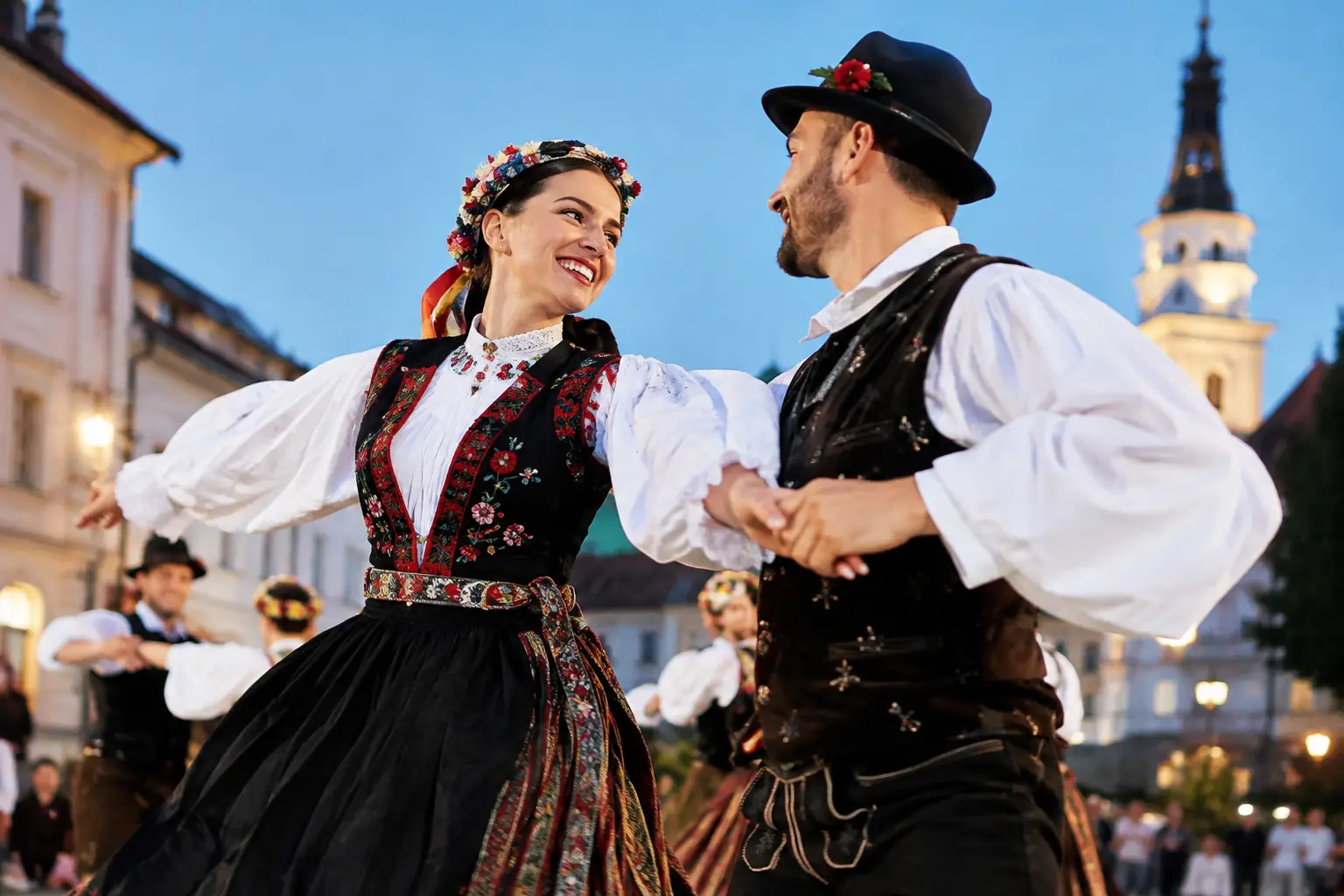
A restaurant table can tell you what a country eats. Live folklore tells you how it celebrates. In Ljubljana, that difference matters: Slovenia’s traditions are best understood with a glass raised, a song in the room, dancers in regional costume, and guests laughing together before dessert arrives.
For travelers with only a few evenings in the city, a folklore dinner show brings the essential parts of Slovenian hospitality together in one place. You do not need to know the steps, speak the language, or arrive with a textbook’s worth of history. Come curious and ready to join the celebration.
What Live Folklore Feels Like in Slovenia
Folklore is sometimes mistaken for something quiet, distant, and preserved behind glass. Slovenian tradition certainly has deep roots, but it was never meant to be experienced only as an exhibit. It lives in village gatherings, wedding customs, harvest celebrations, family tables, local songs, and dances passed from one generation to the next.
A live performance changes the relationship between visitor and tradition. Instead of reading a description of a regional dance, you hear the rhythm that drives it. Instead of seeing a costume in a display case, you notice the movement of the skirts, the detail of the embroidery, and the confidence of the performers wearing it. The room becomes part of the story.
That is especially meaningful in a country as varied as Slovenia. Though Slovenia is small on the map, its regions have distinct musical styles, foods, clothing, dialects, and dance traditions. A well-crafted evening can travel across these regional identities without asking guests to spend days planning separate excursions. It is a lively introduction, not a replacement for exploring the country, but it gives every later visit more context.
More Than a Performance Between Courses
The best cultural evenings do not treat food as an interruption and entertainment as background noise. They let each part build the next. A welcome drink loosens up a room of strangers. A traditional meal gives everyone a shared starting point. Music then gathers attention, dance brings energy, and participatory games turn spectators into companions for the night.
At a Slovenian dinner show, guests can expect a three-course traditional meal paired with wine, followed by the warm welcome of homemade schnapps and dried fruit. These details are not random additions. They reflect the generous rhythm of Slovenian hospitality, where offering food and drink is a genuine way of saying you are welcome here.
Then come the performers, regional stories, folk songs, and dances. The experience may include costumes, games, and invitations to join in. For many travelers, the moment they remember most is not watching a perfect dance routine. It is the moment they attempt a few steps themselves, laugh with their table, and realize that the evening has become social rather than staged.
There is a useful balance here. Guests who prefer to watch can enjoy a polished show, while those who want more interaction have a chance to participate. No one needs to perform. But the invitation is part of the charm.
Why Food Makes Folklore More Memorable
A traditional meal is often the most immediate introduction to a place, because flavor does not require translation. Slovenian cuisine reflects the country’s position between the Alps, the Adriatic, the Pannonian Plain, and the Balkans. You may notice hearty mountain influences, Central European comfort foods, Mediterranean freshness, and local ingredients brought together on one table.
During a folklore evening, food does more than fill the time before the show. It creates the setting for it. Sharing a meal slows a group down. It gives couples, families, solo travelers, and tour groups a chance to settle in before the music begins. By the time a dance invites participation, the room already feels warmer.
For international visitors, this format also removes a common travel dilemma: choosing between a good dinner and a cultural activity. In a short city break, it is easy to spend an evening researching restaurants, showtimes, transportation, and reservations, then realize the plans do not quite fit together. A combined evening offers a clear, organized alternative with a full experience built around Slovenian culture.
Live Folklore Connects People Who Arrive as Strangers
The social side is what separates a folklore evening from a standard concert or restaurant reservation. Visitors often arrive from different countries and leave having shared a toast, learned a phrase, clapped along to a song, or tried a dance together. It is a simple kind of connection, but it is one of travel’s lasting pleasures.
This is particularly good for multigenerational groups. Grandparents can enjoy the stories and music, adults can appreciate the food and wine, and younger guests often love the games, costumes, and chance to move. Couples find it more memorable than another quiet dinner, while friend groups get an evening that gives everyone something to talk about afterward.
Group organizers and travel professionals also value the practical side. A fixed, structured program is easier to place into an itinerary than several separate reservations. When a group needs dinner, entertainment, cultural content, and a welcoming atmosphere, one reliable evening can meet all four needs. For groups of 10 or more, that clarity can make the difference between a complicated night of logistics and a smooth shared event.
What Makes an Experience Feel Authentic
Authenticity is not about making visitors feel like they have stepped backward in time. Slovenia is a modern, creative country, and its traditions continue because people choose to celebrate them. An authentic folklore experience respects the origins of the music, dances, customs, and food while presenting them in a way that international guests can enjoy.
That means context matters. A performance should make regional traditions understandable without turning them into a lecture. It should be festive without becoming careless, and organized without feeling stiff. Professional performers, thoughtful storytelling, traditional costumes, and a clear connection to Slovenian customs all help create that trust.
It also depends on what you want from your evening. Travelers seeking a quiet, specialized study of folk music may prefer a concert or museum program. Those looking for a broad, joyful introduction to Slovenia will likely enjoy the energy of dinner, wine, live music, dancing, and audience participation. Neither choice is more valid, but they offer very different nights.
Traditional Slovenian Evening was created for guests who want that shared, celebratory version of culture. The format brings together regional folklore, a traditional meal, local drinks, stories, games, and a small gift to take home. It is designed to feel welcoming even if you know nothing about Slovenia when you walk in.
How to Make the Most of a Folklore Dinner Show
Arrive ready to be present rather than rushing in after a packed day. If possible, leave enough time before the evening to return to your accommodation, freshen up, and come hungry. The experience is more enjoyable when it becomes the main plan for the night, not something squeezed between sightseeing stops.
Bring curiosity, too. Ask about a dance, listen for the regional differences in the music, and taste the meal as part of the story. If the performers invite guests to join a game or learn a few steps, say yes if it feels comfortable. You do not need talent. Enthusiasm is the only qualification.
For larger groups, book early and share dietary needs in advance. A little preparation helps the hosts create a relaxed evening, especially when coordinating families, coach groups, or celebrations. The goal is simple: once you are seated, you should be free to enjoy the food, the music, and the people around you.
When you leave Ljubljana, you may not remember every name of every dance. You will remember the sound of the room, the raised glasses, the generous table, and the feeling that Slovenia welcomed you into its celebration. Save one evening for that kind of memory.