
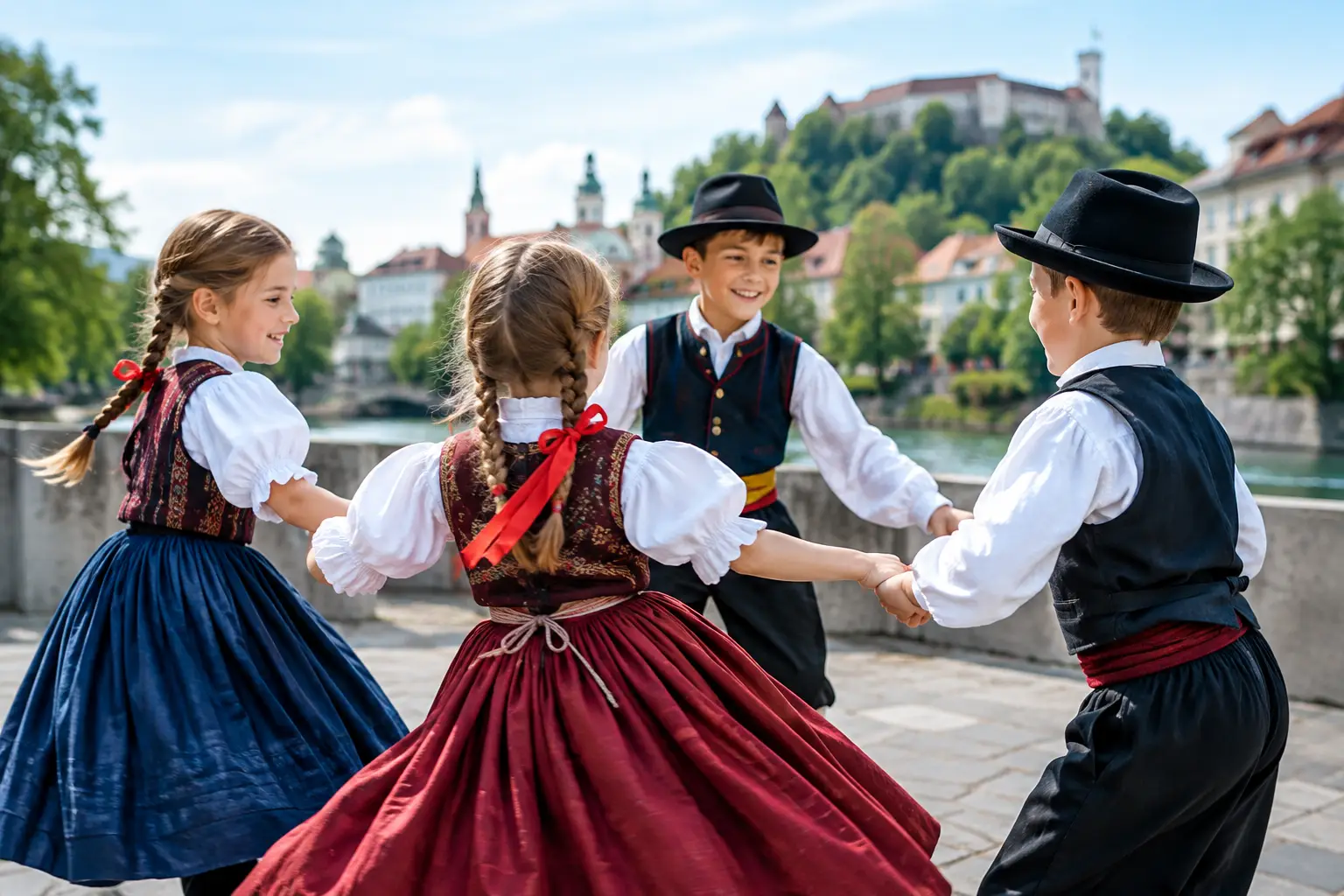
A child’s first folk dance rarely begins with perfect steps. It begins with a hand held by a parent, a bright tune from the musicians, and the irresistible sight of a room smiling and clapping together. So, can children join folk dances? In many Slovenian cultural experiences, children are warmly invited to take part in the fun, at their own pace and with no pressure to perform.
For visiting families, this can turn dinner into one of the most memorable evenings of a Ljubljana trip. Instead of asking children to sit quietly through a long performance, a well-designed Slovenian evening gives them moments to listen, laugh, taste local food, watch colorful costumes, and, when invited, step onto the dance floor.
Can Children Join Folk Dances? Usually, Yes
Folk dancing is social by nature. Traditional Slovenian dances were created for communities: village celebrations, weddings, seasonal gatherings, and evenings when music brought generations together. That welcoming spirit is still the heart of a good live folklore program.
Children do not need dance training, special shoes, or knowledge of Slovenian customs to participate. The guest dances are generally introduced in an easy, lighthearted way, with performers demonstrating the rhythm and movement first. A simple circle dance, a line formation, or a partner step can be far more approachable than it looks from the table.
Of course, every child is different. Some will race to join the dancers before the invitation is finished. Others may prefer to watch from beside a parent, clap along, or wait until later in the evening. Both responses are completely fine. The purpose is shared enjoyment, not getting every footstep right.
What children can expect on the dance floor
The best family-friendly folk dance moments are short, clear, and full of encouragement. Professional performers lead the activity, keep the pace manageable, and make space for guests who are learning as they go. Children often enjoy copying the costumes, following a simple beat, and seeing adults let go of their usual travel-day seriousness.
A young child may participate for one song and then return to the table. An older child or teenager may stay for every dance, especially once they realize the room is filled with fellow travelers rather than a formal audience. There is no scorecard, no spotlight, and no need to know the language.
Parents should stay close to younger children and use their best judgment about energy levels, confidence, and the amount of activity in the room. Folk dance is joyful movement, but a lively evening can become exciting quickly when music, applause, and games are underway.
Why a Slovenian Folk Evening Works for Families
Travel itineraries can be demanding for children. Museums may require patience, guided tours can feel long, and another restaurant meal may not sound exciting after a full day of sightseeing. A cultural dinner show changes the rhythm of the evening.
Slovenian traditions are experienced with all the senses. Guests enjoy a three-course meal with wine for adults, homemade schnapps served with dried fruit as part of the welcome ritual, live folk music, stories, regional dances, playful audience moments, and a small gift to take home. For children, the appeal is not a lecture about culture. It is seeing culture happen around them.
The food also gives families a relaxed anchor between activities. Parents can enjoy a proper local meal while children have breaks from the action. If anyone in your party has dietary needs, food preferences, or questions about suitable menu options for younger guests, it is wise to ask before booking so the evening feels comfortable from the first course onward.
Culture that feels lived, not staged at a distance
A folklore performance can be beautiful to watch, but participation adds another layer. When children hear the music up close, notice the details in traditional dress, and try a few steps themselves, Slovenia becomes more than a place on a map.
This matters especially for multigenerational groups. Grandparents, parents, and children can share the same moment without needing separate activities. A teenager might laugh at a dance game, a younger child might be delighted by the musicians, and an adult might finally learn why particular regions have their own costumes and dance styles.
At Traditional Slovenian Evening, the program brings together food, stories, music, and dances from different Slovenian regions in one festive night. It is designed as a shared celebration, which makes it particularly appealing for families who want more than a standard dinner reservation.
A Few Practical Tips Before You Go
Family participation is easier when expectations are simple. Tell children beforehand that there will be musicians, performers in traditional costumes, and chances to join in, but make clear that joining the dance is always their choice. Children tend to enjoy an activity more when they do not feel pushed onto the floor.
Arrive with enough time to settle in, especially after a busy day exploring Ljubljana. A rushed arrival can make a child feel overwhelmed before the music even starts. Comfortable clothes are a good idea, and shoes that are easy to move in will make spontaneous dancing much more enjoyable.
For very young children, consider the timing of the evening. A late dinner may overlap with bedtime, even if the entertainment is exciting. Older children often thrive in the lively atmosphere, while toddlers may need a quieter break or an earlier departure. The right choice depends on your family’s routine, not on a rule about what children “should” enjoy.
If you are traveling with a larger group, such as several families, a school group, or a coach tour, confirm arrangements in advance. Group organizers should ask about the program flow, seating, menu needs, and the best way to make younger guests feel included. Clear planning lets everyone relax once the evening begins.
Joining Respectfully Makes It More Fun
Folk dance is welcoming, but it is also part of Slovenia’s cultural heritage. The most rewarding way to participate is with curiosity and good humor. Follow the performers’ lead, pay attention to the instructions, and avoid treating traditional costumes or dances as a joke.
That does not mean the room must be serious. Quite the opposite. Slovenian hospitality has room for laughter, cheering, and the occasional missed step. Respect simply means recognizing that the music and movement carry real stories from the places and people who shaped them.
Parents can model this beautifully. Clap along, try the dance if invited, and let children see that being a respectful guest can also mean being an enthusiastic one. When adults participate without worrying about looking polished, children usually feel freer to enjoy themselves too.
What if your child does not want to dance?
They can still have a wonderful evening. Watching skilled dancers, listening to accordion-led melodies and traditional songs, enjoying the meal, and joining a game from the table are all valid ways to take part. Some children need time to observe before they feel ready, and some simply prefer the role of cheerful audience member.
There is also value in leaving a little room for surprise. A child who says no to the first invitation may be the one pulling you toward the dance floor later. The goal is not to create a perfect family photo. It is to make space for a genuine travel memory, whether that means dancing in the center of the room or clapping from a favorite seat near the music.
If your family is looking for a Ljubljana evening with generous food, live entertainment, and a real chance to share Slovenian tradition together, choose an experience where children are welcomed as guests in the celebration. Let them watch, taste, laugh, and perhaps take those first happy folk-dance steps when the music calls.