
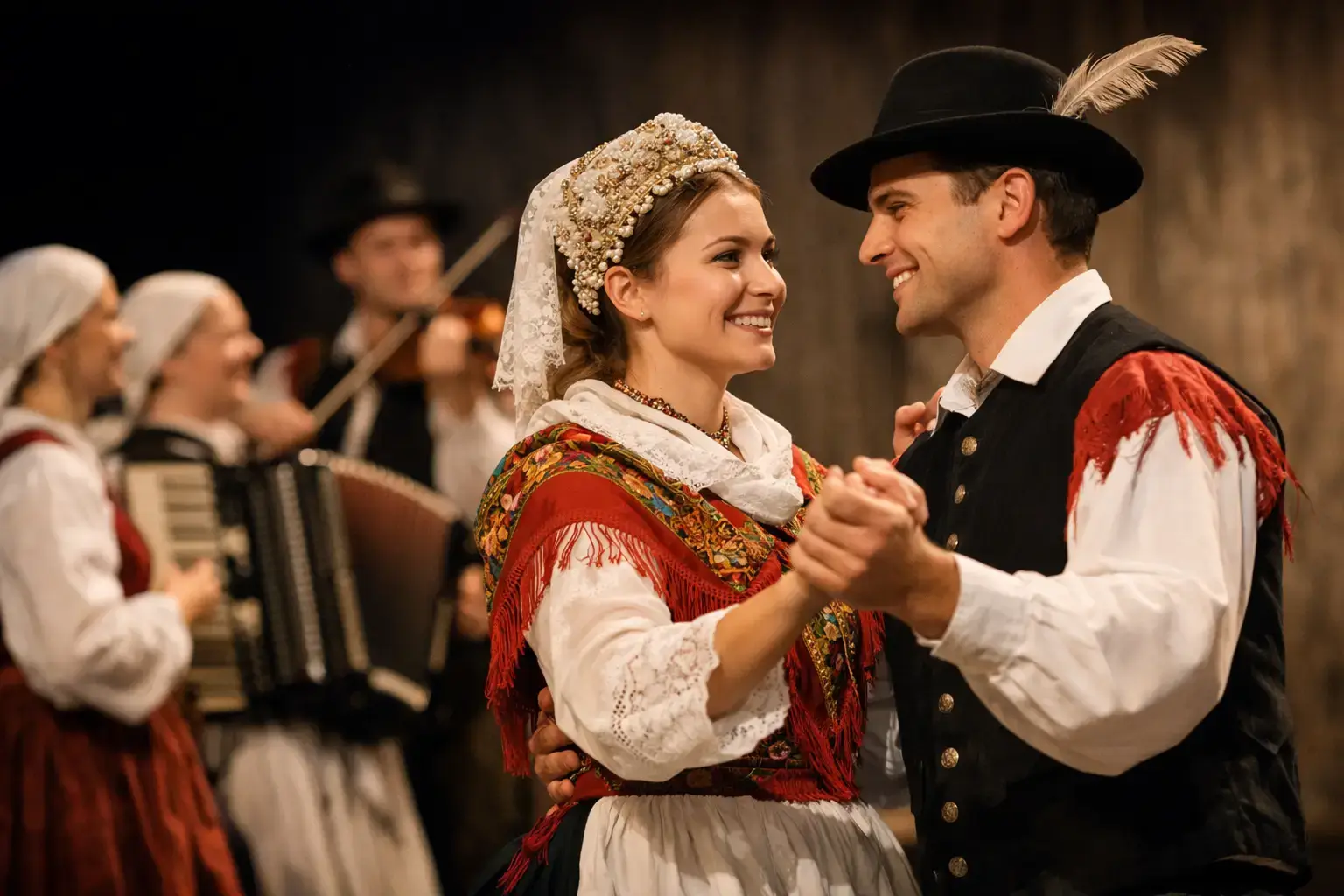
A Slovenian folklore show is not the kind of evening where you sit quietly in the dark and politely clap at the end. It is a table full of local food and wine, musicians setting the rhythm, dancers in traditional costumes, stories that travel between Slovenia’s regions, and guests who soon find themselves laughing, singing, and perhaps learning a few dance steps of their own.
For visitors with only a few nights in Ljubljana, it is an easy and joyful way to experience more than a restaurant meal. Instead of trying to arrange dinner, live music, and cultural activities separately, you can share them all in one lively evening – with local hospitality at the center.
What Makes a Slovenian Folklore Show Special?
Slovenia may be small on the map, but its cultural landscape is wonderfully varied. Alpine villages, the Karst plateau, the Mediterranean coast, the Pannonian plains, and the rolling wine regions have each shaped their own customs, melodies, clothing, and ways of celebrating. A well-presented folklore evening brings that variety to life without requiring guests to travel the whole country in one week.
The music is made for company. Folk tunes can be tender and nostalgic, then suddenly quicken into a dance that fills the room with energy. Traditional dances often begin with clear, welcoming patterns, yet the costumes and choreography carry details tied to particular regions and communities. You do not need prior knowledge of Slovenian history to enjoy them. The pleasure comes first; the cultural understanding follows naturally.
That is the difference between a folklore show and a formal lesson. You are not expected to memorize names, dates, or steps. You are invited to taste, listen, watch, ask questions, and join when the moment feels right.
Dinner Is Part of the Celebration
Food is one of the most direct introductions to a country, especially after a day of walking Ljubljana’s bridges, markets, and castle hill. A traditional Slovenian evening pairs the show with a three-course meal designed to make the experience feel generous rather than rushed. Local wine accompanies the table, while a homemade schnapps welcome with dried fruit adds a warm, distinctly festive opening.
Slovenian cooking reflects the same regional mix found in its folk traditions. Depending on the menu, guests may encounter hearty central-European influences, mountain flavors, seasonal vegetables, comforting dumplings, or dishes connected to the country’s farming and wine-growing heritage. The point is not to present every Slovenian recipe in one sitting. It is to offer a satisfying taste of the country in the social setting where these dishes make the most sense: around a shared table.
For travelers, this combination has a practical advantage. A standard restaurant reservation can be excellent, but it may leave you wondering what to do afterward. A folklore dinner show gives the entire night a shape. You arrive, are welcomed, eat well, enjoy live entertainment, meet other travelers, and leave with a story worth retelling.
From Watching to Joining In
The most memorable moments usually happen when the line between audience and performers becomes a little less fixed. Guests may be invited to take part in simple games, try a group dance, or join a toast. No one needs to be an experienced dancer, and nobody is expected to perform perfectly. A good host makes participation feel optional, lighthearted, and easy.
This matters for couples, friends, families with older children, and multigenerational groups. People do not always remember every course of dinner or every song they heard on vacation. They remember the moment their table tried a dance together, the friendly cheer after a game, or the stranger from another country who became a companion for the evening.
If you prefer to watch rather than dance, that is completely fine too. The performers, music, costumes, and storytelling still create a full experience from your seat. Participation adds another layer of fun, but it should never feel like a test of confidence.
Costumes Tell Their Own Stories
Traditional Slovenian costumes are far more than decorative stage clothing. Their fabrics, embroidery, aprons, hats, jewelry, and silhouettes often signal regional identity, local craftsmanship, or the occasion for which they were worn. On stage, they add color and movement. Up close, they offer a glimpse of how communities expressed pride and belonging long before modern national branding.
A folklore performance cannot show every variation from every village. Slovenia has too much local richness for that. But seeing several traditions represented in one evening gives visitors a useful starting point and makes the country’s cultural diversity feel real, not abstract.
Stories Connect the Steps and Songs
Music and dance become more meaningful when they are placed in context. Short stories about customs, celebrations, and everyday life help explain why a song is sung or where a dance comes from. The best storytelling is clear and lively, not academic. It gives international guests enough background to appreciate what they are seeing while keeping the mood festive.
You may hear about traditions linked to harvest time, weddings, village gatherings, or seasonal celebrations. These are reminders that folklore was never created only for a stage. It grew out of real community life – people marking important moments together with food, music, movement, and humor.
Who Will Enjoy This Kind of Evening?
A Slovenian folklore show suits travelers who want a cultural activity that feels relaxed, social, and easy to fit into a Ljubljana itinerary. It works especially well for first-time visitors who want an introduction to Slovenian traditions without spending hours researching individual venues or regional customs.
Couples often enjoy the mix of dinner and entertainment because it turns an ordinary night out into an occasion. Friend groups appreciate the lively atmosphere and shared games. Families and multigenerational groups can enjoy an activity where different ages have something to follow, from the food and costumes to the music and dancing.
It is also a dependable choice for organized groups. Tour leaders and travel planners need more than a good idea – they need a clear schedule, fixed expectations, and an experience that can welcome guests with different interests. A hosted dinner show meets those needs while still feeling personal. Groups of 10 or more can make a cultural evening one of the warmest shared memories of a Slovenian itinerary.
There are a few trade-offs to consider. Travelers seeking a silent, highly detailed historical lecture may prefer a museum visit or specialist tour. Those looking for a late-night club may want to continue elsewhere after the program. But for guests who want local culture with laughter, a proper meal, and a room full of energy, the format fits beautifully.
How to Get the Most From the Evening
Come hungry, arrive ready to be present, and treat the experience as a celebration rather than a performance you need to evaluate. Ask about a dish that is new to you. Notice the details in the costumes. Raise your glass when the hosts invite you to toast. If you are offered a simple dance step, give it a try – or cheer on the people who do.
A little curiosity goes a long way. Slovenia’s traditions are most enjoyable when they are shared, and your interest helps create the atmosphere that makes the room feel alive. Photos can be a lovely reminder, but do not spend the entire evening behind a screen. Listen for the instruments, taste the wine, and let the rhythm do its work.
At Traditional Slovenian Evening, the goal is simple: give guests a generous, entertaining welcome to the country through a three-course meal, wine, music, regional dance, stories, games, and a small gift to take home. It is culture with a full table, not culture behind glass.
When you leave, you may not know every Slovenian folk song by name. But you may carry away something better: the feeling of having been welcomed into a celebration, even for one unforgettable night.